Building Better Padel Courts: Flooring Materials, Costs & Expert Tips in Dubai
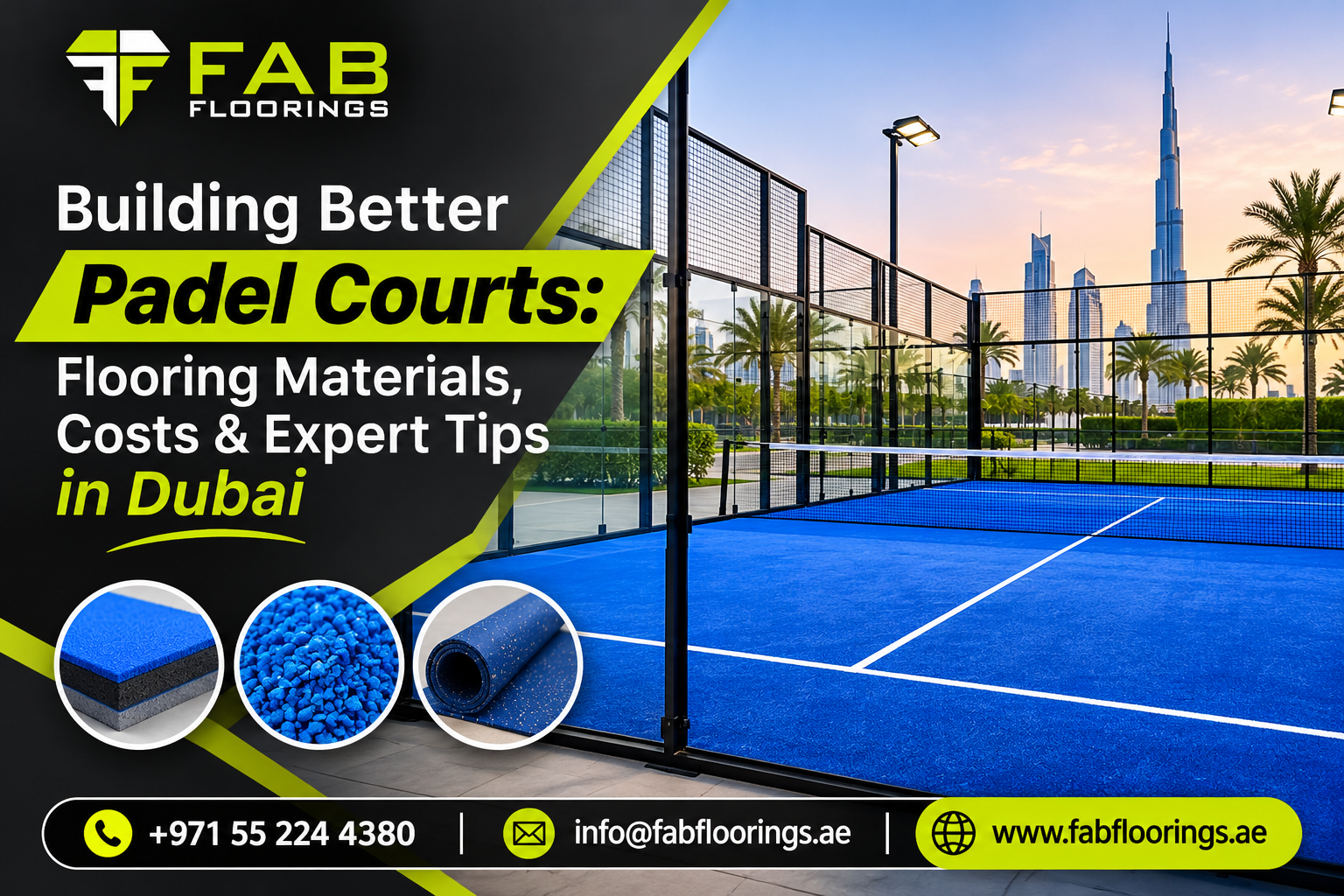
A well-designed padel court needs more than strong glass walls, quality lighting and a professional playing area. The flooring plays a major role in ball bounce, player movement, grip and overall playing comfort. Choosing the right surface also affects maintenance requirements, court lifespan and long-term operating costs.
If you are planning a sports facility, hotel court, private club or commercial recreation project, selecting the right Padel court flooring Dubai solution should be one of your first decisions. Dubai's hot climate, outdoor conditions and growing demand for padel facilities make material selection and installation quality especially important.
This guide explains the available flooring materials, important construction stages, installation considerations and factors that influence project costs. It will also help you understand what to look for when comparing padel court contractors and suppliers in Dubai.
Why Is Padel Court Flooring So Important?
Padel is a fast-paced sport involving quick turns, short sprints, sudden stops and frequent changes in direction. Players need a surface that supports controlled movement without making the court unnecessarily slippery or uncomfortable.
The flooring directly influences several aspects of the playing experience:
-
Player grip: A suitable surface helps players move, stop and change direction with better control.
-
Ball bounce: Consistent surface conditions support predictable ball behaviour.
-
Playing comfort: Properly selected turf and a suitable base help create a comfortable playing environment.
-
Weather performance: Outdoor courts require materials that can handle heat, sunlight and occasional moisture.
-
Maintenance: Quality materials and correct installation can reduce avoidable repair work.
-
Court appearance: Consistent turf, clean markings and professional finishing give the facility a polished look.
For facility owners, these factors also affect customer satisfaction. A poorly selected surface may lead to inconsistent gameplay, faster wear and higher maintenance expenses.
Choosing professional Padel court flooring Dubai solutions from the planning stage can help prevent these problems.
Types of Padel Court Flooring Materials
Artificial turf is the most commonly used playing surface for padel courts. However, not every turf product is suitable for this sport. The right option depends on the court design, expected usage, indoor or outdoor location and project specifications.
1. Artificial Grass for Padel Courts
Artificial grass is widely used because it provides a suitable playing surface and gives courts a professional sports appearance.
Padel-specific artificial turf is designed to support player movement and consistent ball interaction. It is available in different colours, pile heights, fibre types and construction styles.
When selecting artificial grass, consider:
-
Fibre quality and resistance to wear
-
Pile height and turf density
-
Surface texture and playing characteristics
-
UV resistance for outdoor installations
-
Compatibility with the specified sand infill
-
Manufacturer's technical specifications
Avoid choosing turf based only on its colour or appearance. A product designed for landscaping may not provide the performance required for a padel court.
2. Textured Synthetic Turf
Textured synthetic turf is another option for sports surfaces. Its fibre structure and construction influence how the surface responds to player movement and regular use.
For padel applications, the product should be specifically evaluated for sports performance. Important considerations include fibre recovery, durability, surface consistency and suitability for sand infill where required.
Ask your supplier for product specifications and, where available, technical test information before making a decision.
3. Sand-Filled Padel Court Turf
Sand-filled turf systems use carefully distributed sand within the artificial grass fibres. The infill helps support the turf structure and influences the playing characteristics of the surface.
However, the type and quantity of sand should follow the turf manufacturer's recommendations and the selected court system's technical requirements.
Uneven sand distribution can affect surface consistency. Too much or too little infill may also change the way players move across the court.
A professional installer should ensure that the infill is distributed evenly and that the finished surface meets the project's specifications.
Important: There is no single turf specification that suits every padel court. Always compare technical data, intended use and manufacturer guidance rather than selecting a product on price alone.
Indoor vs Outdoor Padel Court Flooring in Dubai
The location of your court should influence your flooring decision. Indoor and outdoor facilities face different environmental conditions and maintenance requirements.
Indoor Padel Courts
Indoor courts are protected from direct sunlight, rain and most external weather conditions. This can help maintain more consistent surface conditions.
When planning indoor installations, consider:
-
Ventilation and indoor temperature
-
Lighting and visibility
-
Flooring performance under frequent use
-
Drainage requirements, if relevant to the facility
-
Ease of cleaning and maintenance
Indoor courts in commercial sports centres may experience heavy daily use. Select turf that matches the expected playing frequency.
Outdoor Padel Courts
Outdoor courts in Dubai need materials and construction methods suitable for local weather conditions.
Direct sunlight, high temperatures, dust and occasional rain can influence the surface and supporting structure. Therefore, outdoor Padel court flooring Dubai projects should consider:
-
UV-resistant turf materials
-
Suitable sub-base preparation
-
Effective drainage and surface water management
-
Durable adhesives and installation accessories
-
Proper installation around court edges
-
Maintenance access and cleaning requirements
Drainage deserves particular attention. Water should not collect on the playing surface or remain trapped beneath the turf. The base and drainage design should be planned according to the site conditions.
Padel Court Construction Dubai: Important Stages to Understand
A padel court is a complete sports installation, not simply an artificial grass surface. The flooring must work with the base, enclosure, glass panels, metal structure and other court components.
A professional Padel Court Construction Dubai project generally includes the following stages.
1. Site Inspection and Planning
The first step is to assess the proposed installation area. The contractor should check the available space, ground condition, access, surrounding structures and intended court layout.
The planning stage should also establish whether the court will be indoor or outdoor and how frequently it is expected to be used.
Ask for a site assessment before finalising the material or project budget. It helps identify potential issues early.
2. Base Preparation
The base provides support for the playing surface and court structure. It should be prepared according to the approved design and site conditions.
Depending on the project, the work may involve excavation, ground levelling, compaction, concrete construction and drainage provisions.
A poorly prepared base can create uneven areas, drainage problems and installation difficulties. Even high-quality artificial turf cannot compensate for an unsuitable foundation.
3. Court Structure and Enclosure Installation
The court structure typically includes metal framing, glass panels, fencing and access points. These components must be installed according to the approved court design and relevant safety requirements.
The flooring contractor and structural installation team should coordinate their work to avoid gaps, incorrect measurements or finishing problems.
4. Artificial Turf Installation
Once the base and supporting work are ready, the installation team can prepare the turf.
The process generally includes:
-
Measuring and cutting the turf according to the court layout
-
Positioning the turf sections correctly
-
Joining seams with suitable materials
-
Securing the surface as specified
-
Installing the required sand infill
-
Brushing and checking the finished surface
Seams should be properly aligned and secured. Poor joint finishing can affect the appearance and durability of the playing area.
5. Court Markings and Final Inspection
Court lines must be positioned accurately according to the approved layout. After installation, the team should inspect the surface for uneven areas, loose joints, inconsistent infill and visible finishing defects.
The project should be handed over only after the relevant checks are completed.
Padel Court Installation Dubai: What Should You Check?
Choosing the right product is only one part of the process. Installation quality has a direct effect on how the court performs over time.
When comparing Padel Court Installation Dubai services, review these points:
Experience with sports surfaces: Ask whether the installation team has worked on padel or similar sports flooring projects. General landscaping experience does not automatically mean experience with sports turf systems.
Material specifications: Request details about turf construction, fibre type, pile height, backing, UV resistance and recommended infill.
Base and drainage planning: Confirm who is responsible for foundation preparation and how the project will manage water.
Seam and edge finishing: Ask how turf joints, boundaries and court edges will be completed.
Project timeline: Request a realistic schedule covering site preparation, structural work, flooring installation and inspection.
Warranty and maintenance: Understand what the warranty covers and which maintenance activities are required to protect the surface.
A written scope of work makes it easier to compare contractors and avoid misunderstandings.
How Much Does Padel Court Flooring Cost in Dubai?
The cost of a padel court flooring project in Dubai depends on several factors. There is no reliable single price for every installation because site conditions, product specifications and project scope can differ significantly.
Here are the main factors that influence the budget.
1. Artificial Turf Quality
Turf products vary in fibre construction, density, backing, UV resistance and technical performance. Higher-specification products may have a higher initial cost but can be appropriate for facilities expecting frequent use.
Compare products based on their specifications and expected service requirements, not simply the quoted price per square metre.
2. Site Preparation and Foundation
A ready-to-use base may require less preparation than an undeveloped site. Excavation, levelling, compaction, concrete work and drainage can add significantly to the project cost.
This is why a site inspection is important before requesting a final quotation.
3. Indoor or Outdoor Installation
Outdoor projects may require additional attention to weather exposure, drainage and material suitability. Indoor projects may involve different site preparation, access and ventilation considerations.
The actual cost difference depends on the facility design and site conditions.
4. Court Size and Project Scope
The total flooring area, number of courts and layout influence material quantities and installation time.
A multi-court facility may also require additional site coordination, access planning and phased installation.
5. Labour and Installation Complexity
Projects with difficult access, complex layouts or additional preparation work may require more labour and time.
A detailed quotation should separate material, installation and any additional construction work wherever possible.
What Should a Padel Flooring Quotation Include?
Before accepting a proposal, check whether it clearly identifies:
-
Turf product and technical specifications
-
Estimated material quantity
-
Base preparation responsibilities
-
Installation and jointing work
-
Sand infill requirements, if applicable
-
Drainage and related civil work
-
Delivery and project timeline
-
Warranty and maintenance conditions
Comparing quotations with the same scope makes it easier to understand the actual value offered by each contractor.
How to Choose the Right Padel Court Contractors Dubai
The contractor you select can influence the quality of the finished court, project coordination and future maintenance requirements.
Use these practical checks before making a decision.
Review Relevant Project Experience
Ask for examples of completed padel courts or similar sports flooring installations. Project photographs, technical details and client references can help you evaluate the contractor's experience.
Ask for Product Details
A professional contractor should be able to explain why a particular turf system is suitable for your project. They should also provide relevant technical documentation where available.
Confirm Installation Responsibilities
Clarify whether the contractor handles the complete project or only the flooring. For example, some suppliers provide turf materials but do not undertake foundation work, glass installation or structural construction.
Knowing who handles each stage prevents delays and confusion.
Compare More Than the Initial Price
A low quotation may exclude important work such as base preparation, drainage, accessories or final inspection.
Review the complete scope, material quality, warranty and installation process before comparing prices.
Finding a Reliable Padel Court Supplier Dubai
A reliable Padel Court Supplier Dubai should offer suitable sports turf products and clear information about their applications.
Before placing an order, ask the supplier:
-
Is the turf specifically designed for padel courts?
-
What are its fibre, pile height and backing specifications?
-
Is the product suitable for outdoor exposure in Dubai?
-
What type and quantity of infill does the manufacturer recommend?
-
Are samples or product references available?
-
What warranty and after-sales support are provided?
If you are sourcing materials for a project outside Dubai, you can also compare a Padel Court Flooring Supplier UAE based on product availability, delivery arrangements, technical support and installation coordination.
The most suitable supplier is not necessarily the one offering the lowest price. It is the one that can match the product to your project requirements and provide dependable information throughout the buying process.
Common Mistakes to Avoid When Building a Padel Court
Even a well-funded project can face problems if important details are overlooked.
Watch out for these common mistakes:
-
Choosing general-purpose artificial grass: Landscaping turf may not offer the playing characteristics required for padel.
-
Ignoring base preparation: An uneven or unsuitable base can affect the finished surface.
-
Overlooking drainage: Poor water management can lead to standing water and maintenance issues.
-
Selecting materials on appearance alone: Colour and texture do not confirm sports performance.
-
Skipping technical checks: Always review product specifications before ordering.
-
Not defining project responsibilities: Clearly establish who handles civil work, structural installation and flooring.
-
Ignoring maintenance requirements: Regular care helps preserve the surface and identify problems early.
Planning these details before construction can help reduce avoidable costs and installation delays.
Padel Court Flooring Maintenance Tips
Regular maintenance helps keep the court clean, consistent and ready for use. The maintenance routine should follow the turf manufacturer's instructions.
A basic maintenance plan may include:
-
Remove leaves, dust and loose debris regularly.
-
Brush the turf using suitable equipment to maintain an even surface.
-
Check sand distribution and replenish infill when recommended.
-
Inspect seams, edges and high-use areas for damage.
-
Keep drainage outlets clear.
-
Arrange professional inspections when signs of wear or surface irregularities appear.
The frequency of maintenance depends on usage, environmental exposure and the turf system. A busy commercial court may need more frequent attention than a private residential court.