PU Flooring Manufacturers: A Complete Guide to Choose the Right Supplier
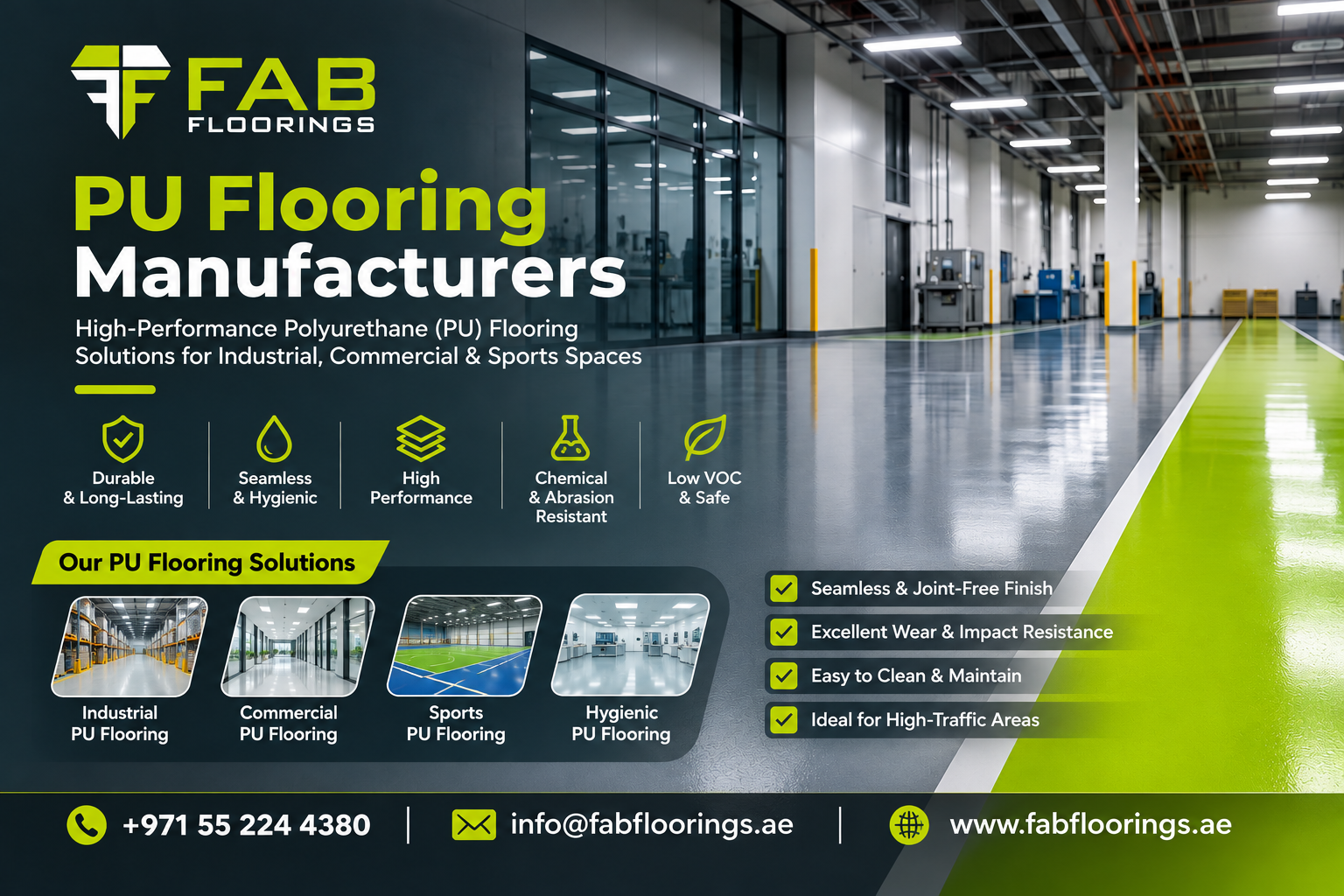
Choosing the right flooring is an important decision for any industrial or commercial project. The floor must handle daily traffic, resist wear, provide safety, and remain easy to maintain. Polyurethane (PU) flooring is a popular option because it offers durability, flexibility, and resistance to several common workplace challenges.
However, selecting the right flooring system involves more than comparing product prices. You also need to understand the material, its applications, installation requirements, and the experience of the manufacturer. Working with reliable PU flooring manufacturers can help you find a solution that meets your facility's performance and maintenance needs.
This guide explains how PU flooring works, where it is used, its major benefits, and what to consider before choosing a supplier.
What Is PU Flooring?
Polyurethane flooring, commonly known as PU flooring, is a resin-based flooring system made using polyurethane materials. It creates a seamless or joint-minimised surface, depending on the system design and installation method.
Unlike ordinary floor coverings, PU flooring is designed to perform in demanding environments. It can handle regular foot traffic, equipment movement, temperature variations, and exposure to certain chemicals.
The exact performance depends on the formulation, thickness, surface finish, substrate preparation, and installation quality.
What Do PU Flooring Manufacturers Do?
Professional PU flooring manufacturers develop and supply polyurethane-based flooring materials for different commercial and industrial requirements.
Their work generally involves several important stages:
1. Material Selection and Formulation
Manufacturers select suitable polyurethane resins, additives, pigments, and other components to develop flooring systems with specific performance characteristics.
2. Product Development
Different environments require different flooring properties. Manufacturers develop formulations for applications such as chemical resistance, flexibility, abrasion resistance, and thermal performance.
3. Quality Testing
Depending on the product and intended application, manufacturers may evaluate properties such as adhesion, hardness, flexibility, abrasion resistance, and chemical resistance.
4. Technical Support
Experienced manufacturers can help customers understand product specifications, substrate requirements, application methods, and maintenance recommendations.
A knowledgeable manufacturer does more than supply flooring material. It helps ensure that the selected system is suitable for the project's actual operating conditions.
Types of PU Flooring Systems
Not every facility requires the same flooring solution. Understanding the available types makes it easier to choose the right material.
1. Self-Levelling PU Flooring
Self-levelling polyurethane flooring creates a smooth and seamless finish. It is suitable for facilities where easy cleaning and a uniform surface are important.
Common applications include commercial spaces, laboratories, and selected industrial environments.
2. PU Screed Flooring
PU screed is a thicker flooring system designed for demanding industrial conditions. It can provide good mechanical strength and resistance to temperature changes, depending on the formulation.
It is commonly considered for food processing facilities, manufacturing units, and industrial kitchens.
3. Anti-Slip PU Flooring
Safety is an important consideration in workplaces where water, oils, or other liquids may reach the floor.
Anti-slip PU flooring uses a textured surface finish to improve traction. The appropriate texture depends on the environment and cleaning requirements.
4. Flexible PU Flooring
Flexible polyurethane systems are designed to accommodate some substrate movement and provide a degree of flexibility.
They may be suitable for applications where a more resilient surface is required.
Key Benefits of PU Flooring
There are several reasons businesses consider polyurethane flooring for their facilities.
Excellent Wear Resistance
Industrial floors experience continuous movement from workers, machinery, carts, and equipment. A properly specified PU flooring system can withstand regular wear and help maintain surface performance.
Chemical Resistance
Certain PU flooring formulations offer resistance to oils, cleaning agents, and selected industrial chemicals. However, resistance varies by product, so always check the manufacturer's chemical compatibility information.
Thermal Performance
Some polyurethane flooring systems are designed to tolerate temperature fluctuations. This makes them useful in environments such as food processing facilities and temperature-controlled spaces.
Seamless and Hygienic Surface
Many PU flooring systems create a seamless finish that reduces joints where dirt and contaminants can collect. This makes cleaning and maintenance easier.
Long-Term Maintenance Benefits
When correctly selected and installed, PU flooring can reduce the need for frequent surface repairs. Proper cleaning and maintenance also help preserve its performance.
Where Is PU Flooring Used?
The versatility of polyurethane flooring makes it suitable for several industries.
Industrial Facilities
Industrial PU flooring is commonly used in manufacturing plants, production units, warehouses, and processing facilities. These environments need floors that can withstand equipment movement, regular traffic, and operational demands.
Commercial Buildings
Commercial PU flooring can be considered for offices, retail spaces, showrooms, and other high-traffic environments. Its seamless appearance and range of available finishes make it a practical option for selected commercial projects.
Food and Beverage Industry
Food processing facilities require flooring that supports regular cleaning and hygiene practices. Suitable PU flooring systems can offer seamless surfaces and resistance to certain cleaning chemicals and temperature variations.
Healthcare Facilities
Hospitals, laboratories, and healthcare environments require surfaces that are easy to clean and maintain. Selected polyurethane systems can meet these requirements when specified according to the facility's hygiene and operational standards.
Commercial Kitchens
Commercial kitchens experience moisture, spills, cleaning chemicals, and frequent movement. PU flooring with an appropriate anti-slip finish can help address these challenges.
PU Flooring vs. Epoxy Flooring: What Is the Difference?
PU and epoxy flooring are both resin-based systems, but they have different performance characteristics.
|
Comparison Factor |
PU Flooring |
Epoxy Flooring |
|
Flexibility |
Generally more flexible |
Generally more rigid |
|
Thermal shock resistance |
Often better in specialised PU systems |
Depends on formulation |
|
Chemical resistance |
Depends on PU formulation |
Often strong against selected chemicals |
|
Surface finish |
Multiple finish options |
Multiple finish options |
|
Applications |
Industrial and commercial environments |
Industrial and commercial environments |
The right choice depends on your facility's operating conditions. For example, environments with frequent temperature changes may benefit from a suitable PU system, while certain industrial environments may be better served by epoxy.
Always compare technical data sheets before making a final decision.
How to Choose the Right PU Flooring Manufacturers
Choosing the right supplier is essential for getting a flooring system that performs as expected.
Here are some important factors to evaluate.
1. Check Product Quality and Specifications
Review the manufacturer's technical data sheets. Look for information about thickness, compressive strength, abrasion resistance, chemical resistance, and temperature tolerance where applicable.
Do not select a product based only on its advertised features.
2. Understand Your Project Requirements
Before contacting PU flooring suppliers, identify how the floor will be used.
Consider:
-
Daily foot and vehicle traffic
-
Exposure to chemicals and moisture
-
Temperature variations
-
Cleaning frequency
-
Slip resistance requirements
-
Expected flooring lifespan
These details help manufacturers recommend a suitable system.
3. Evaluate Industry Experience
Look for a PU flooring company with experience in projects similar to yours. Ask about previous installations, product applications, and technical support.
Relevant project experience can help identify potential installation challenges before work begins.
4. Ask About Installation Support
Even high-quality flooring materials can underperform if installed incorrectly.
Check whether the supplier provides installation guidance, trained applicators, substrate preparation recommendations, and curing instructions.
5. Compare Overall Project Costs
The lowest initial quotation is not always the most economical option.
Compare material costs, surface preparation, labour, installation time, maintenance requirements, and expected service life. A complete cost assessment gives you a clearer picture of the investment.
Common Mistakes to Avoid When Selecting PU Flooring
Before finalising your flooring project, avoid these common mistakes:
-
Ignoring substrate preparation: Poor surface preparation can lead to adhesion problems and premature flooring failure.
-
Choosing the wrong thickness: Flooring thickness should match the expected mechanical and operational load.
-
Overlooking slip resistance: Select a suitable finish based on moisture exposure and workplace safety requirements.
-
Ignoring chemical compatibility: Confirm that the flooring formulation can withstand the chemicals used in your facility.
-
Focusing only on price: Consider product quality, installation expertise, technical support, and maintenance costs.
A proper site assessment and product recommendation can help prevent expensive mistakes.
Conclusion
PU flooring offers a practical flooring solution for many industrial and commercial environments. Its flexibility, seamless finish, wear resistance, and availability in different formulations make it suitable for applications ranging from manufacturing facilities to commercial kitchens.
However, the results depend on choosing the right product and ensuring proper installation. Before making a decision, compare specifications, understand your facility's requirements, and evaluate the experience of different PU flooring manufacturers.
If you are planning a new flooring project or upgrading an existing surface, explore suitable polyurethane flooring solutions from Fab Floorings. Contact the team to discuss your application, technical requirements, and flooring options for your space.