Creating Safe Workout Spaces with Non-Slip Gym Floorings
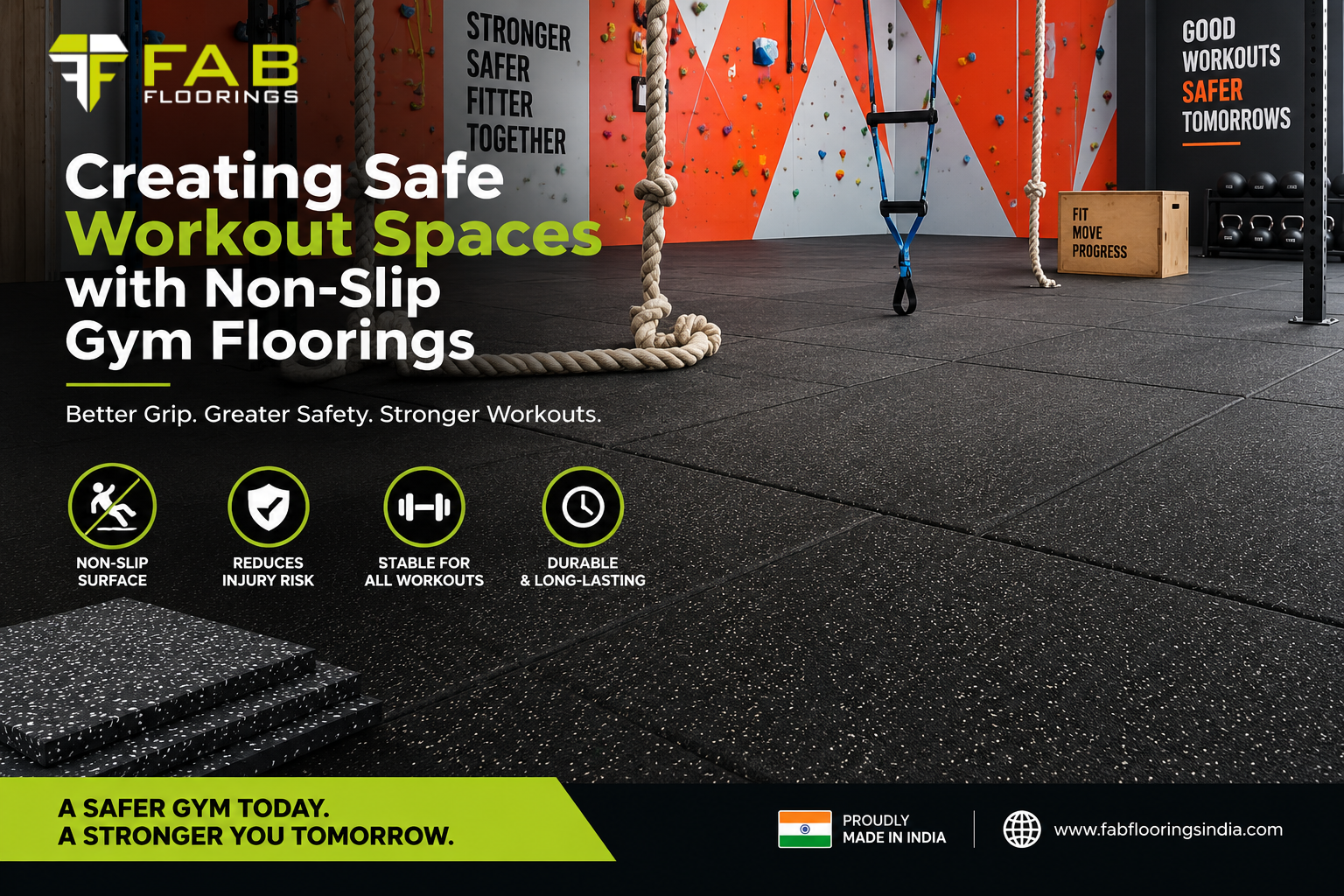
A safe gym starts from the ground up. Whether you are setting up a home workout area, commercial fitness centre, CrossFit studio, or professional training facility, the flooring plays an important role in creating a secure and comfortable workout environment. Non-slip gym flooring helps provide reliable traction, stability, shock absorption, and support during different types of exercise.
During workouts, sweat, moisture, equipment movement, and repeated impact can make ordinary flooring unsafe. A properly selected gym floor provides better grip underfoot while helping protect the subfloor from heavy equipment and repeated use.
At Fab Floorings, we provide durable flooring solutions designed for gyms, fitness centres, training studios, and other active spaces. Our range includes rubber tiles, rubber rolls, interlocking mats, and other flooring options suitable for different workout requirements.
Why Is Non-Slip Gym Flooring Important?
A gym floor needs to do more than look good. It should provide a stable surface that can handle constant movement and heavy use. Non-slip flooring helps improve traction and reduces the possibility of unwanted foot movement during exercises.
Better Grip During Workouts
Exercises such as squats, lunges, weightlifting, HIIT, and functional training require stable footing. A textured or properly designed non-slip surface helps keep your feet firmly positioned while you move.
This additional grip can be particularly useful in high-intensity workout areas where sweat and moisture may accumulate.
Improved Shock Absorption
Dropping weights, jumping, running, and other high-impact movements place considerable stress on both the floor and the person exercising. Rubber gym flooring can absorb a portion of this impact, creating a more comfortable surface for demanding workouts.
Protection for Floors and Equipment
Heavy dumbbells, weight machines, racks, and other gym equipment can damage conventional flooring. Durable rubber flooring helps protect the underlying surface from scratches, dents, and impact while providing a stable base for equipment.
Noise and Vibration Reduction
Gym activities can generate considerable impact noise and vibration, especially in weightlifting and functional training areas. Dense rubber flooring can help reduce some of the noise and vibration created by equipment and foot movement, making it useful for both commercial and residential gyms.
Popular Non-Slip Flooring Options for Gyms
The right flooring depends on the type of workout, traffic level, equipment, available space, and maintenance requirements.
Rubber Gym Flooring
Rubber is one of the most practical choices for demanding gym environments. It is durable, resilient, and naturally provides good traction when manufactured with a suitable surface texture.
Rubber flooring is available in tiles, rolls, and mats. Tiles are convenient for creating defined workout zones, while rolls can provide broad coverage with fewer seams.
Key benefits include:
• Excellent durability for heavy-use areas
• Good traction and stability
• Shock and impact absorption
• Suitable for weights and strength training
• Easy routine maintenance
• Available in different thicknesses and formats
Interlocking Rubber Mats
Interlocking rubber mats are designed to connect together without requiring complicated installation. Their modular construction makes them suitable for home gyms, functional training zones, weightlifting areas, and smaller commercial spaces.
Individual sections can also be replaced if a particular area becomes damaged or heavily worn.
Rubber Rolls
Rubber rolls are a practical option when you need continuous flooring across a larger gym area. They can create a clean, professional appearance while reducing the number of joints between individual flooring pieces.
They are commonly considered for commercial gyms, fitness centres, strength-training areas, and large workout spaces.
PVC Gym Flooring
PVC flooring can be considered for multipurpose workout environments where easy maintenance and design flexibility are important. Depending on the product specification, PVC flooring can provide a durable and slip-resistant surface suitable for activities such as group exercise, aerobics, and general fitness.
EVA Foam Mats
EVA foam mats provide a softer and cushioned surface and are often used for lighter workouts, stretching, yoga, Pilates, and home exercise areas. They are lightweight and easy to install, although they are generally less suitable than heavy-duty rubber for areas exposed to repeated heavy weight impact.
How to Choose the Right Non-Slip Gym Flooring
There is no single flooring solution for every gym. Consider the following factors before making a selection.
Workout Type
Start by identifying how the space will be used. Heavy weightlifting and CrossFit areas require flooring that can withstand impact and equipment loads. Yoga, stretching, and low-impact exercise areas may require greater cushioning and comfort.
Traffic and Usage
A commercial fitness centre with hundreds of users each day needs a more durable flooring solution than a lightly used home gym. Consider expected foot traffic and equipment usage when selecting the material and thickness.
Flooring Thickness
The appropriate thickness depends on the workout area and level of impact. Weightlifting zones generally require more robust flooring than areas used primarily for stretching or light exercise.
Installation Area
Measure the space carefully before choosing between tiles, mats, and rolls. Interlocking tiles can be useful for smaller or segmented areas, while rubber rolls may be more efficient for larger spaces.
Maintenance Requirements
Gym flooring should be easy to clean because sweat, dust, and moisture are common in workout environments. Follow the manufacturer's recommended cleaning method to preserve the flooring surface and its grip.
Maintenance Tips for Non-Slip Gym Flooring
Regular maintenance helps keep gym flooring clean, functional, and visually appealing.
• Remove dust and loose debris regularly.
• Clean spills and moisture promptly.
• Use cleaning products recommended for the flooring material.
• Avoid harsh chemicals that can damage the surface.
• Inspect high-traffic and heavy-equipment areas periodically.
• Replace severely damaged or worn sections when required.
Creating Safer Gym Zones
Different areas of a gym can have different flooring requirements. A weightlifting zone may need thick rubber flooring for impact protection, while a stretching area may benefit from a softer surface.
Using flooring according to the activity can help create a more functional workout environment. It can also improve the overall appearance of the gym by visually separating training zones.
Why Choose Fab Floorings for Gym Flooring?
Fab Floorings offers a range of flooring solutions for gyms, fitness centres, training studios, and other active environments. Our product range includes rubber tiles, rubber rolls, interlocking flooring, EPDM flooring, EVA mats, and other specialized flooring solutions.
We can help you select a flooring option based on your workout activities, space, usage requirements, and installation needs.
Build a Safer Workout Environment
Choosing the right non-slip gym flooring is an important part of creating a safe and functional fitness space. A suitable floor can provide better traction, absorb impact, support heavy equipment, and make everyday maintenance easier.
From home gyms to large commercial fitness centres, selecting flooring according to the specific requirements of each workout zone can make the space more comfortable and practical.
Explore Fab Floorings' gym flooring solutions to find a suitable surface for your fitness environment.