Ceramic Marble Tiles Manufacturers & Suppliers in Dubai, UAE
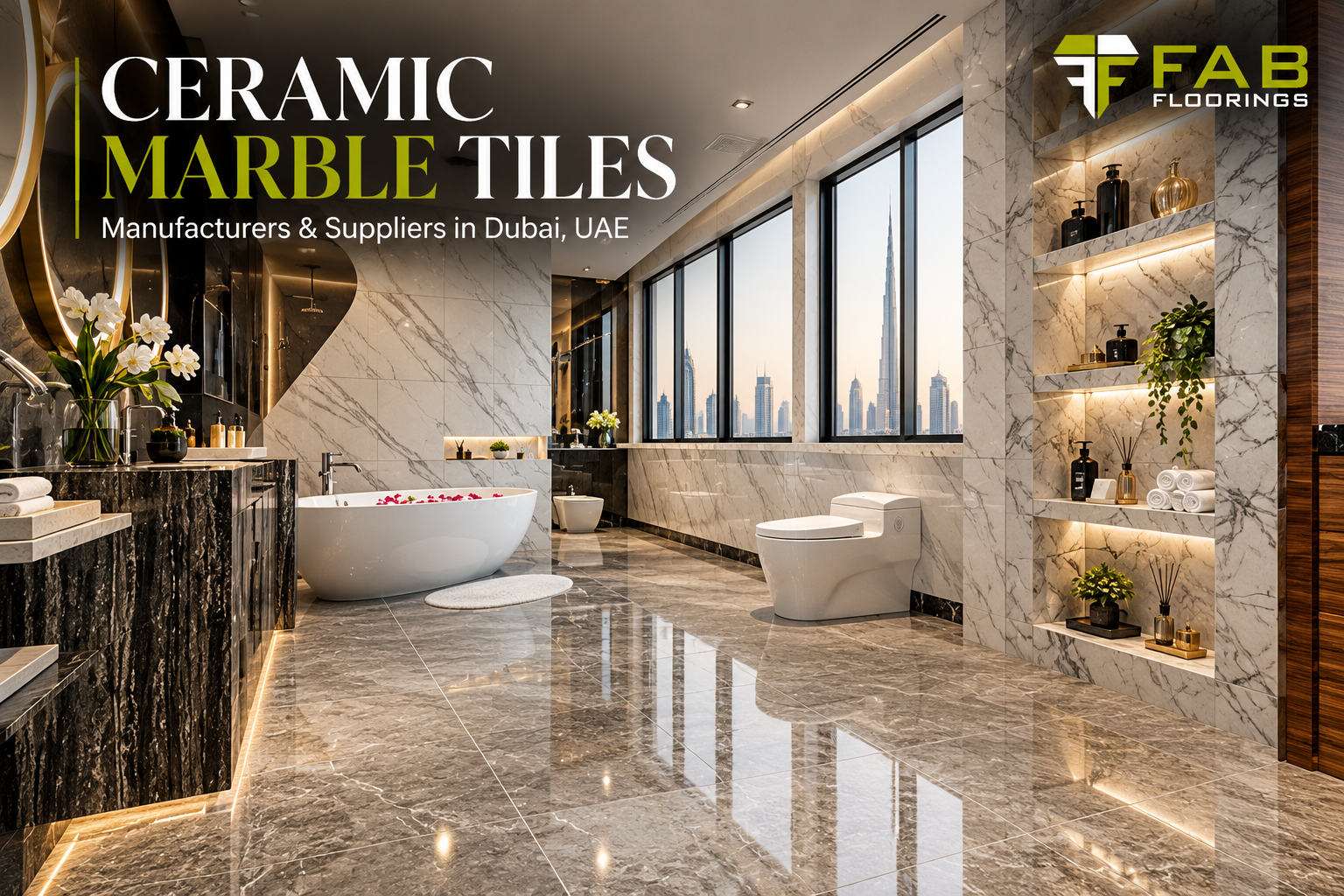
Ceramic Marble Tiles Manufacturers & Suppliers in Dubai, UAE – Complete Buying Guide
Dubai's residential and commercial architecture is known for refined finishes, spacious interiors, and carefully selected materials. From luxury villas and hotel lobbies to contemporary apartments and retail showrooms, flooring and wall finishes play an important role in the overall design.
Ceramic marble tiles in Dubai, UAE offer a practical way to achieve the visual elegance of natural marble using manufactured ceramic surfaces. Their availability in various colours, patterns, formats, and finishes makes them a popular choice for modern interior projects.
For homeowners, architects, contractors, and property developers, selecting marble-look ceramic tiles involves more than appearance. Material specifications, installation conditions, slip resistance, maintenance, and supplier reliability are equally important.
This guide from FAB Floorings UAE explains ceramic marble-look tiles, their applications, available styles, comparisons with natural marble and other flooring materials, and what to consider when choosing a ceramic tile manufacturer or supplier in Dubai.
What Are Ceramic Marble Tiles?
Ceramic marble tiles are manufactured ceramic products with surface designs inspired by natural marble.
Unlike natural marble, which is quarried from stone, ceramic tiles are produced from prepared mineral-based materials that are shaped, dried, and fired at high temperatures.
Marble-inspired designs may be created using digital printing and suitable glazing techniques.
Depending on the manufacturer and product type, ceramic marble-look tiles can reproduce decorative patterns associated with Carrara, Calacatta, Statuario, Emperador, and other popular marble styles.
The finished product offers a manufactured alternative for buyers who prefer marble aesthetics but want to explore different maintenance, pricing, and installation characteristics.
It is important to distinguish between standard ceramic tiles, porcelain tiles, and natural marble because each material has different technical properties.
Why Choose Marble-Look Ceramic Tiles in Dubai?
Ceramic marble-effect tiles can offer several practical advantages when selected correctly for the intended application.
1. Elegant Marble-Inspired Appearance
Modern decorative manufacturing techniques allow ceramic tiles to reproduce detailed veining, layered colours, and other natural-stone-inspired patterns.
This makes them suitable for contemporary apartments, luxury villas, hospitality projects, and commercial interiors.
2. Different Surface Finish Options
Depending on the selected range, marble-look tiles may be available in polished, glossy, matte, satin, or textured finishes.
The appropriate finish should be selected according to the room, expected traffic, maintenance preferences, and slip-resistance requirements.
3. Practical Everyday Maintenance
Many glazed ceramic tiles have surfaces that are relatively straightforward to clean using compatible products.
Natural marble may require different cleaning and sealing practices depending on the stone type and finish.
4. Variety of Formats and Patterns
Ceramic marble-look tiles are produced in multiple formats, allowing designers to create different layouts.
Larger tiles may reduce the visual prominence of grout joints, while smaller formats can suit decorative features and compact spaces.
5. Suitable Options for Residential and Commercial Interiors
Tiles designed for the relevant traffic and service conditions may be considered for residential living rooms, hotel corridors, commercial reception areas, and other interior applications.
Performance requirements should always be checked for the chosen product.
Popular Ceramic Marble Tile Designs in UAE Interiors
Marble-look finishes can create very different architectural effects.
Carrara White Marble-Effect Tiles
Carrara-inspired designs typically feature a light background with grey veining.
They are frequently considered for contemporary living rooms, bathrooms, hotel interiors, and minimalist architectural schemes.
Calacatta Gold Marble-Look Tiles
Calacatta-inspired surfaces often combine a white base with prominent grey or warm gold veining.
They can create a distinctive appearance in luxury villas, reception areas, and feature walls.
Statuario Marble-Effect Tiles
Statuario-inspired patterns often feature a bright base colour and bold veining.
These designs suit interiors where a strong marble appearance is desired.
Emperador Brown Marble-Look Tiles
Emperador-inspired finishes use brown, beige, and warm-toned patterns.
They can complement wood finishes, warm lighting, and traditional luxury interiors.
Travertine-Inspired Ceramic Tiles
Travertine-style surfaces offer soft neutral tones and stone-inspired textures.
They can be considered for contemporary residential and hospitality designs.
Grey and Contemporary Marble Finishes
Grey marble-look tiles can suit offices, commercial interiors, modern apartments, and minimalist spaces.
The final design should account for lighting, adjacent wall finishes, furniture, and the selected tile format.
Where Are Ceramic Marble Tiles Used in Dubai?
Luxury Villas and Residential Interiors
Marble-effect ceramic tiles are often considered for entrance areas, living rooms, dining spaces, and other interior surfaces.
Homeowners can select designs that complement the property's architectural style.
Apartments and Modern Homes
For apartments, the right tile design can create a visually coordinated appearance across different interior spaces.
Tile size, surface finish, and maintenance requirements should reflect the room's daily use.
Hotel Lobbies and Hospitality Spaces
Hotels and serviced accommodation projects often require attractive finishes with appropriate commercial performance.
For these environments, tile selection should consider pedestrian traffic, surface friction, cleaning requirements, and durability.
Commercial Offices and Reception Areas
Marble-look tiles can create a professional appearance in reception areas, meeting spaces, corridors, and selected office interiors.
Commercial projects may also require specific slip-resistance, fire-performance, and accessibility considerations.
Bathrooms and Washrooms
Certain ceramic tile products are suitable for bathroom floors and walls.
However, not all polished or glossy finishes are appropriate for wet floor applications.
Choose a product with verified suitability and relevant surface-friction characteristics for the intended location.
Kitchens and Backsplashes
Marble-look ceramic tiles can be used to create decorative kitchen walls, backsplashes, and selected flooring areas.
The product's surface finish, cleaning requirements, and resistance to the expected operating conditions should be reviewed.
Feature Walls
Large-format marble-look ceramic or porcelain products can produce a visually continuous decorative effect in selected feature-wall installations.
Wall substrate capacity, adhesive suitability, and installation methods must be assessed, especially for larger tiles.
Ceramic Marble Tiles vs Natural Marble
Although ceramic marble-look tiles and natural marble may appear similar, they differ in construction and performance.
| Feature | Ceramic marble-look tiles | Natural marble |
|---|---|---|
| Material | Manufactured ceramic body | Quarried natural stone |
| Appearance | Printed or glazed marble-inspired designs | Unique natural veining |
| Surface variation | Depends on manufacturing range | Natural variation between pieces |
| Maintenance | Generally straightforward with compatible cleaners | May require specialized cleaning or sealing |
| Moisture performance | Depends on tile category and installation | Depends on marble type, finish, and treatment |
| Installation | Requires suitable tile adhesives and substrate | Requires stone-compatible installation materials |
| Pricing | Varies by product and specification | Varies by stone origin, grade, and finish |
Neither material should be considered universally better for every project.
The correct decision depends on design preferences, budget, required performance, installation conditions, and long-term maintenance expectations.
Ceramic Tiles vs Porcelain Tiles: Understanding the Difference
Many buyers in Dubai use the terms ceramic and porcelain interchangeably, but they are not always the same.
Porcelain tiles belong to a more specific classification of ceramic products, generally associated with low water absorption under applicable standards.
Conventional ceramic wall tiles and porcelain floor tiles may have different technical characteristics.
Porcelain products are frequently considered for demanding flooring applications, although suitability still depends on the actual product.
Before purchasing, request information about:
-
Tile classification
-
Water absorption
-
Surface finish
-
Breaking strength
-
Wear resistance
-
Slip resistance
-
Intended indoor or outdoor use
-
Manufacturer's installation recommendations
Do not assume that every marble-look ceramic tile is suitable for exterior floors or heavy commercial traffic.
Popular Marble-Look Tile Sizes and Layouts
Ceramic and porcelain marble-effect tiles are manufactured in different sizes.
Examples of common market formats include:
-
300 × 600 mm
-
600 × 600 mm
-
600 × 1200 mm
-
800 × 800 mm
-
Larger decorative formats depending on the manufacturer
These are examples of industry formats, not confirmation of currently available FAB Floorings UAE stock.
Standard Tile Layouts
Standard rectangular or square tiles can work well in residential rooms, kitchens, and selected commercial spaces.
Large-Format Layouts
Larger formats can create a more continuous marble-inspired appearance.
They require particular attention to substrate flatness, handling, tile coverage, movement joints, and compatible installation materials.
Decorative Feature Patterns
Where supported by the product collection, veining and tile placement can be coordinated to create decorative focal points.
Ask your supplier for actual product samples and layout recommendations before ordering.
How to Choose the Right Marble-Look Tile Finish
Glossy Finish
Glossy marble-look tiles create a reflective surface that may suit decorative walls and selected dry interior areas.
Their suitability for flooring, particularly where moisture is present, should be verified through product-specific slip-resistance data.
Matte Finish
Matte finishes create a softer visual appearance and may be appropriate for selected residential and commercial projects.
Textured Finish
Textured tiles can provide different surface characteristics and may be considered in environments requiring additional traction.
Surface texture alone does not establish compliance with a specific slip-resistance requirement.
Polished Finish
Polished finishes can create a premium appearance but require careful application assessment and maintenance planning.
Are Ceramic Marble Tiles Suitable for Dubai's Climate?
Dubai's environmental conditions should be considered whenever flooring and cladding materials are specified.
For indoor air-conditioned spaces, the main concerns may include expected traffic, moisture exposure, cleaning, and installation quality.
For outdoor environments, additional considerations include:
-
Direct sunlight and surface temperature
-
Thermal movement
-
Water absorption
-
Slip resistance
-
Exposure to rain and cleaning water
-
Substrate and fixing conditions
-
Relevant product testing
Not every decorative ceramic tile is suitable for external applications.
For balconies, terraces, and external paving, buyers should choose materials explicitly specified for those conditions.
Ceramic Marble Tile Installation: Key Considerations
A successful tile installation requires suitable materials and careful workmanship.
Step 1: Site Measurement
Measure the installation area and identify the room layout, floor levels, transitions, and required tile quantities.
Step 2: Substrate Assessment
Check the base for stability, flatness, moisture conditions, and compatibility with the intended tile system.
Step 3: Tile Layout Planning
Plan the placement of tile joints, decorative patterns, cuts, and edge details.
For marble-inspired patterns, layout planning can influence the appearance of the completed installation.
Step 4: Adhesive Selection
Use an appropriate tile adhesive suited to the tile classification, size, substrate, and site conditions.
Step 5: Tile Fixing and Alignment
Install tiles with the required adhesive coverage, spacing, and alignment.
Large-format tile installation may require specialized handling and leveling techniques.
Step 6: Grouting and Movement Joints
Use suitable grout and provide movement joints according to the relevant installation specification.
Step 7: Cleaning and Final Inspection
Clean the completed surface using compatible products and inspect the installed flooring before handover.
Installation should follow applicable standards and the instructions of the material manufacturers.
Maintaining Marble-Look Ceramic Tiles
Routine maintenance helps preserve the appearance of ceramic tile surfaces.
Remove dust and grit: Sweep or vacuum loose abrasive particles regularly.
Use suitable cleaning products: Select cleaners compatible with the tile surface and grout.
Clean spills promptly: Address staining materials before they remain on the surface for extended periods.
Protect grout joints: Inspect grout and sealants where applicable.
Avoid unsuitable chemicals: Aggressive products can damage some finishes, coatings, grout, or surrounding materials.
Follow manufacturer instructions: Different glazed, unglazed, polished, and textured products may require different cleaning methods.
What Affects Ceramic Marble Tile Prices in Dubai?
Ceramic marble tile prices vary considerably depending on the product and project.
Important factors include:
-
Ceramic or porcelain classification
-
Tile dimensions and thickness
-
Surface finish and decorative quality
-
Brand and manufacturing origin
-
Technical performance requirements
-
Order quantity
-
Availability of matching batches
-
Substrate preparation
-
Adhesives, grout, and accessories
-
Installation complexity and site location
Large-format or specialty decorative tiles may involve additional handling and installation requirements.
For commercial procurement, ask for a quotation that clearly separates material specifications, quantities, installation scope, and other relevant costs.
How to Choose Ceramic Marble Tiles Manufacturers and Suppliers in Dubai
Selecting a supplier involves evaluating the actual product and the commercial arrangements.
1. Review Product Variety
Compare available marble-inspired designs, formats, and finishes.
Ask whether the required colour and quantity are available from a consistent production batch.
2. Request Technical Documentation
Product specifications help determine whether tiles suit the intended location.
Where relevant, ask for documentation covering water absorption, strength, surface wear, and slip resistance.
3. Confirm Manufacturing Origin
If the project requires tiles from a specific manufacturer or country, verify the product brand, manufacturing origin, and supply documentation.
A distributor or supplier should not automatically be assumed to be the manufacturer.
4. Check Samples Before Ordering
Physical samples can help evaluate colour, texture, surface finish, and compatibility with the overall interior design.
5. Discuss Installation Requirements
Confirm the appropriate adhesive, grout, substrate preparation, and installation method.
6. Clarify Supply and Delivery Terms
For larger projects, confirm quantity, batch consistency, lead times, delivery conditions, and replacement arrangements.
7. Compare Total Project Cost
Consider the complete installed cost instead of choosing solely based on the advertised tile price.
Marble-Look Ceramic Tiles vs Marble-Effect PVC Flooring
For some projects, the most appropriate flooring solution may depend on whether the buyer specifically needs a rigid ceramic surface or prefers a resilient decorative floor.
Ceramic marble-look tiles and marble-effect PVC flooring should not be confused.
Ceramic tiles are rigid products typically installed using suitable tile-setting systems.
PVC flooring is a different material category available in flexible sheets, tiles, and other formats, depending on the product.
For homes, hospitality interiors, and commercial renovations where resilient flooring is being considered, marble-look PVC can provide an alternative design direction.
FAB Floorings UAE also offers PVC flooring in Dubai with marble, stone, and contemporary finishes.
This is an alternative product category rather than a substitute for projects specifically requiring ceramic or porcelain tile specifications.
Planning a Flooring Project in Dubai, UAE?
Choosing the right surface starts with understanding the intended environment.
A luxury villa, retail showroom, hotel, office, bathroom, and outdoor terrace may all require different materials and technical characteristics.
Whether your design calls for ceramic marble-look tiles, porcelain surfaces, or an alternative marble-inspired flooring material, product selection should be based on practical requirements as well as appearance.
FAB Floorings UAE provides flooring solutions for residential, commercial, institutional, and recreational projects across the UAE.
To discuss available product categories and suitable flooring alternatives, contact our team with your project dimensions, intended application, preferred design, and technical requirements.
FAB Floorings UAE
Website: https://fabfloorings.ae/
Phone: +971 55 224 4380
Email: info@fabfloorings.ae
For marble-look resilient flooring alternatives, explore our PVC Flooring Collection.
For product availability and project enquiries, contact FAB Floorings UAE before placing an order.