EVA Foam vs. Rubber Mats: Which One is Right for You?
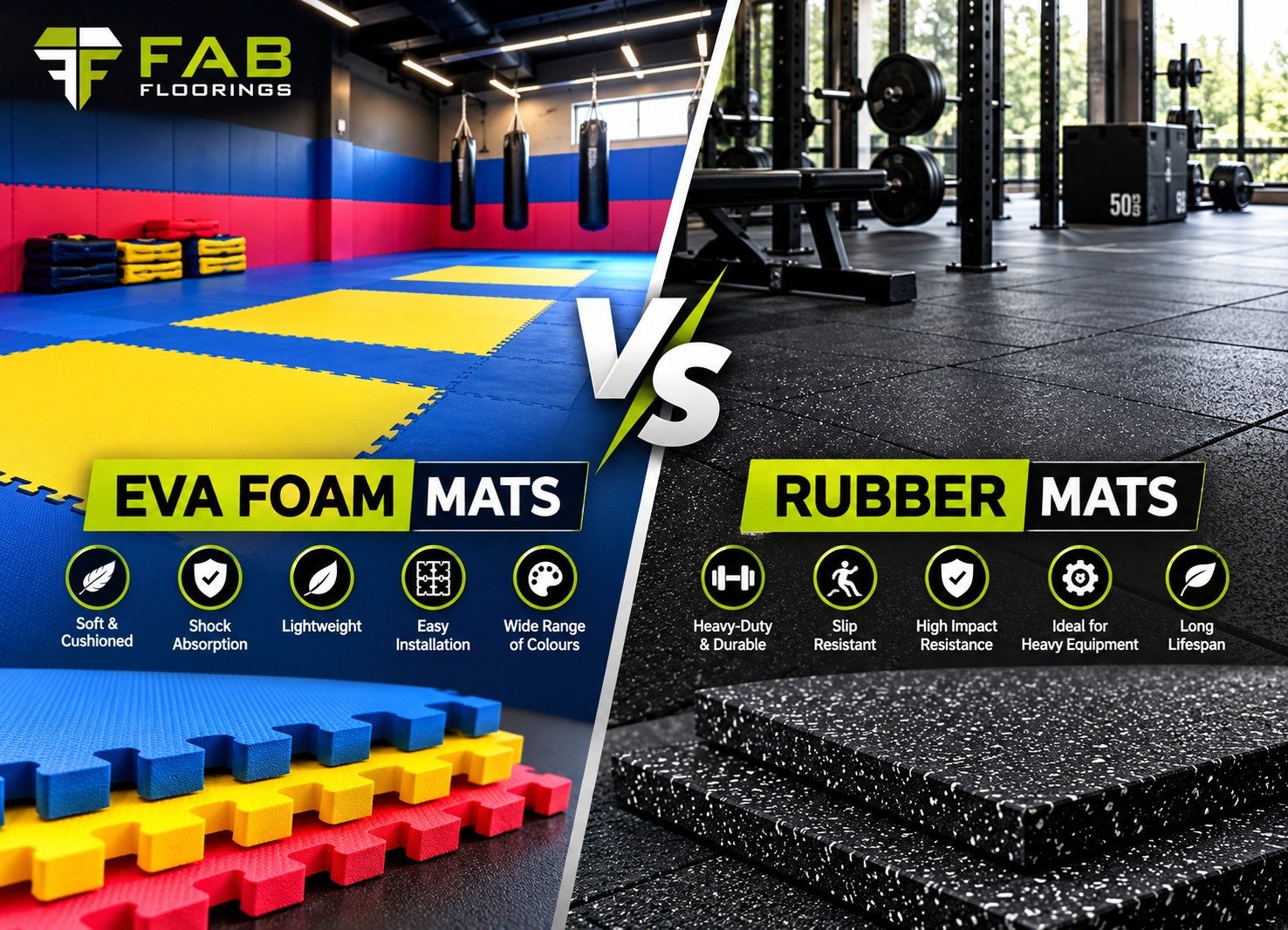
Choosing the right mat can make a major difference in comfort, safety, durability, and floor protection. EVA foam mats and rubber mats are both popular flooring options, but they are designed for different types of spaces and activities.
EVA foam is lightweight, soft, and comfortable, making it suitable for yoga areas, children's play spaces, home workouts, and light-use applications. Rubber mats are denser and more durable, making them a stronger choice for commercial gyms, weight training areas, workshops, and high-impact environments.
What Are EVA Foam Mats?
EVA stands for ethylene-vinyl acetate. EVA foam is a lightweight, flexible, closed-cell material that provides cushioning and impact absorption.
EVA mats are commonly available as interlocking tiles, making them easy to install without complicated tools or permanent fixing. They are particularly useful where users need a softer surface for activities such as stretching, yoga, children's play, or light exercise.
What Are Rubber Mats?
Rubber mats are made from rubber compounds and are designed to provide a firm, resilient surface. They are commonly available in tiles, rolls, and interlocking formats.
Because rubber is denser and more resistant to wear, it is widely used in gyms, fitness centres, weight rooms, workshops, garages, and other high-use areas.
EVA Foam vs Rubber Mats: Key Differences
| Feature | EVA Foam Mats | Rubber Mats |
|---|---|---|
| Comfort | Excellent | Very good |
| Cushioning | High | Moderate to high |
| Durability | Moderate | High |
| Heavy weights | Limited suitability | Excellent |
| Installation | Easy | Depends on product |
| Weight | Lightweight | Heavier |
| Impact resistance | Good for light activity | Excellent for heavy use |
| Maintenance | Easy | Easy |
| Best for | Yoga, play areas, light workouts | Gyms, weights, commercial spaces |
Comfort and Cushioning
EVA Foam
EVA foam provides a soft and cushioned surface underfoot. It can be comfortable for activities that involve sitting, kneeling, stretching, or lying on the floor.
This makes EVA mats particularly useful for yoga studios, children's play areas, home workout spaces, and low-impact exercise areas.
Rubber
Rubber flooring offers a firmer surface with good shock and impact absorption. It provides greater stability when users are standing, moving, or exercising with equipment.
For strength-training areas where heavy equipment and weights are involved, rubber is generally the more appropriate choice.
Which Is More Durable?
Rubber generally has the advantage when durability is the priority.
EVA foam can perform well under light and moderate use, but concentrated loads from heavy equipment can cause compression or surface damage over time.
Rubber mats are better suited to environments with heavy foot traffic, gym equipment, dropped weights, and repeated impact.
Which Is Better for a Gym?
The answer depends on the type of gym.
For a home gym used mainly for yoga, stretching, bodyweight exercises, or light workouts, EVA foam can provide a comfortable and economical flooring option.
For commercial gyms, weightlifting areas, functional training zones, and spaces with heavy equipment, rubber mats are generally the better choice because of their density, stability, and durability.
EVA Foam vs Rubber for Kids' Play Areas
EVA foam is often preferred for children's play areas because its softer surface provides cushioning during play.
Its lightweight construction and interlocking design also make it easy to install, remove, clean, and replace when necessary.
Rubber can be considered for certain children's or recreational applications where greater durability is required, but the appropriate product should be selected based on the age group and intended use.
Installation and Maintenance
EVA interlocking mats are usually simple to install because individual pieces can connect without permanent adhesive. This also makes them convenient when a section needs to be removed or replaced.
Rubber tiles and rolls can also be installed efficiently, but the installation method depends on the product, subfloor, and application. Some projects may require adhesive or professional installation.
Both materials should be cleaned according to the manufacturer's recommendations.
Which One Offers Better Floor Protection?
Both EVA and rubber can help protect the underlying floor, but they perform differently.
EVA foam provides excellent cushioning for light activities and can help reduce minor impact. Rubber offers greater resistance to heavy loads and repeated impact, making it better suited to weight rooms and commercial fitness environments.
EVA Foam vs Rubber: Which One Should You Choose?
Choose EVA Foam Mats If:
- You need a soft and comfortable surface.
- The area is used for yoga or stretching.
- You are creating a children's play area.
- You have a light-use home gym.
- You want lightweight, easy-to-install flooring.
- You need mats that can be removed or rearranged easily.
Choose Rubber Mats If:
- You are setting up a commercial gym.
- The area will contain heavy gym equipment.
- You need strong impact resistance.
- The floor will experience high foot traffic.
- You need greater long-term durability.
- You are creating a weightlifting or functional training area.
Final Verdict
There is no single winner between EVA foam and rubber mats. The right option depends on where the flooring will be installed and how it will be used.
EVA foam is the better choice for comfort, cushioning, lightweight installation, yoga, play areas, and light workouts. Rubber is the better choice for durability, stability, heavy equipment, weight training, and demanding commercial environments.
Before choosing your flooring, consider the activity, equipment load, expected traffic, required thickness, installation method, and maintenance requirements.
For gym flooring in Dubai and across the UAE, selecting the right material based on the actual application can help improve floor protection, user comfort, and long-term performance.