How to Select Flooring for High-Traffic Commercial Entrances
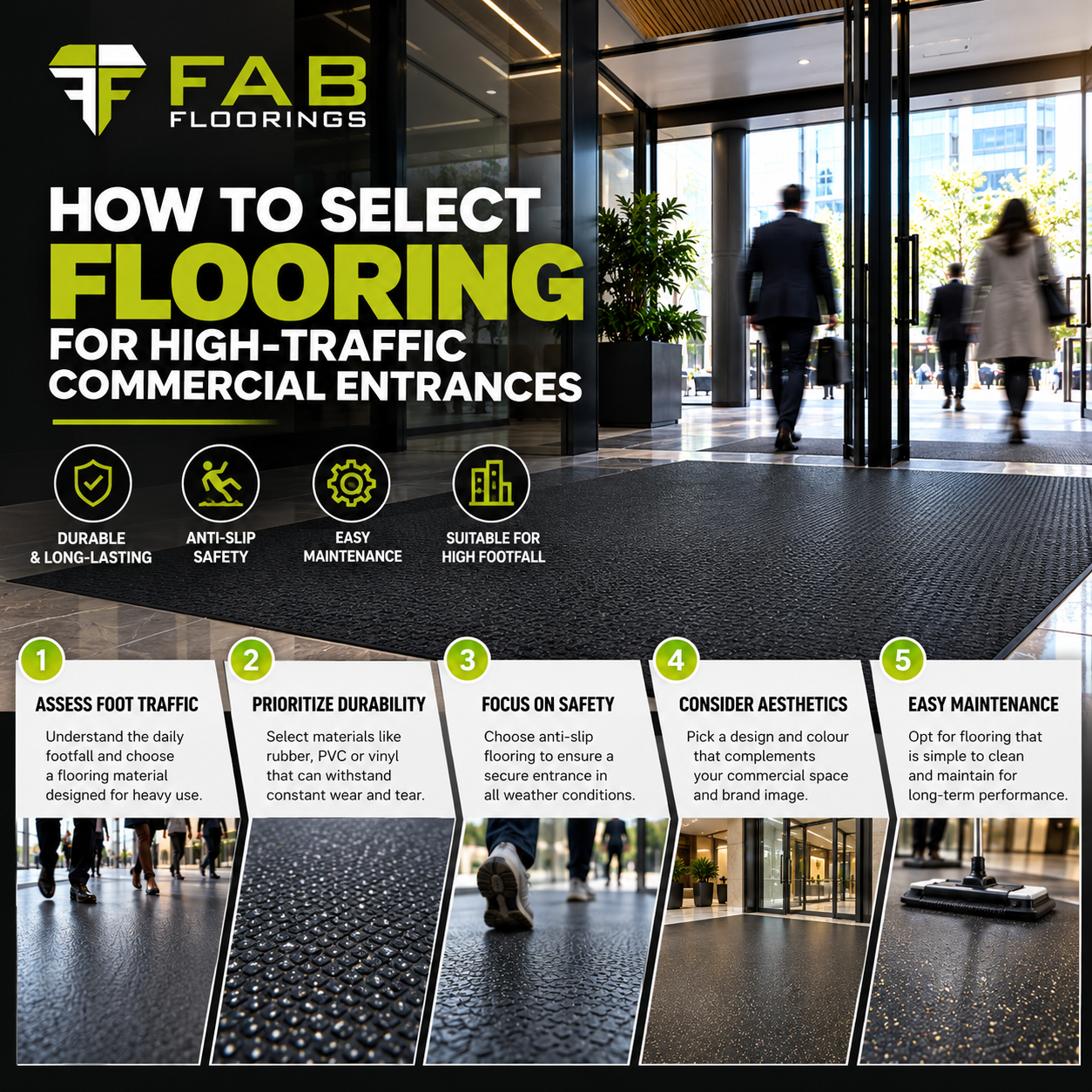
Commercial entrances experience constant foot traffic, dirt, moisture, and everyday wear. Choosing the right flooring helps maintain a professional appearance, improve safety, and reduce long-term maintenance costs. The best flooring for high-traffic commercial entrances should offer durability, slip resistance, easy cleaning, and the strength to withstand frequent use.
1. Consider Foot Traffic and Usage
Before selecting entrance flooring, assess the number of people entering your building daily. Shopping malls, offices, hospitals, hotels, and retail stores require flooring that can handle continuous movement without wearing out quickly. Choose a material designed for heavy commercial use to maintain its appearance and performance.
2. Prioritize Slip Resistance
Safety is essential in commercial entrances, especially during rainy weather when water can enter the building. Select flooring with suitable slip resistance for expected conditions. Entrance matting systems can help capture moisture and dirt before visitors walk onto the main floor, reducing slip risks.
3. Choose Durable Flooring Materials
Different flooring materials offer different benefits:
-
Rubber flooring: Provides cushioning, durability, and good traction for suitable commercial applications.
-
Porcelain or commercial-grade tiles: Offer a hard-wearing surface that is easy to clean when the correct slip-resistant finish is selected.
-
Vinyl flooring: Available in various designs and suitable for many commercial interiors, depending on its wear layer and product specifications.
-
Natural stone: Creates a premium appearance but may require sealing and regular maintenance.
-
Entrance matting: Helps trap dirt and moisture, protecting the flooring beyond the entrance.
Choose a material based on your building's traffic, design requirements, and maintenance needs.
4. Evaluate Cleaning and Maintenance
Commercial entrance floors collect dust, mud, and moisture throughout the day. Select flooring that can be cleaned efficiently without requiring complicated maintenance. Durable entrance mats, regular sweeping, and appropriate cleaning products help preserve the floor and reduce the spread of dirt into the building.
5. Match Flooring with Your Interior Design
Your entrance creates the first impression of your business. Choose flooring colours, patterns, and textures that complement your brand and interior design. Consider how the flooring will look under different lighting conditions and whether it will conceal everyday dirt without compromising cleanliness.
6. Check Installation and Long-Term Costs
Compare the initial purchase price, installation expenses, maintenance requirements, and expected service life. Proper subfloor preparation and professional installation can improve performance and reduce premature damage. Also consider accessibility, transition strips, and compatibility with entrance doors.
Conclusion
Selecting flooring for high-traffic commercial entrances requires balancing durability, safety, appearance, and maintenance. Rubber flooring, commercial-grade tiles, vinyl, stone, and entrance matting can all be suitable when matched to the right environment. Evaluate your building's specific needs and choose a flooring system that delivers reliable performance over time.