The Ultimate Guide to Rubber Flooring for Home and Commercial Gyms
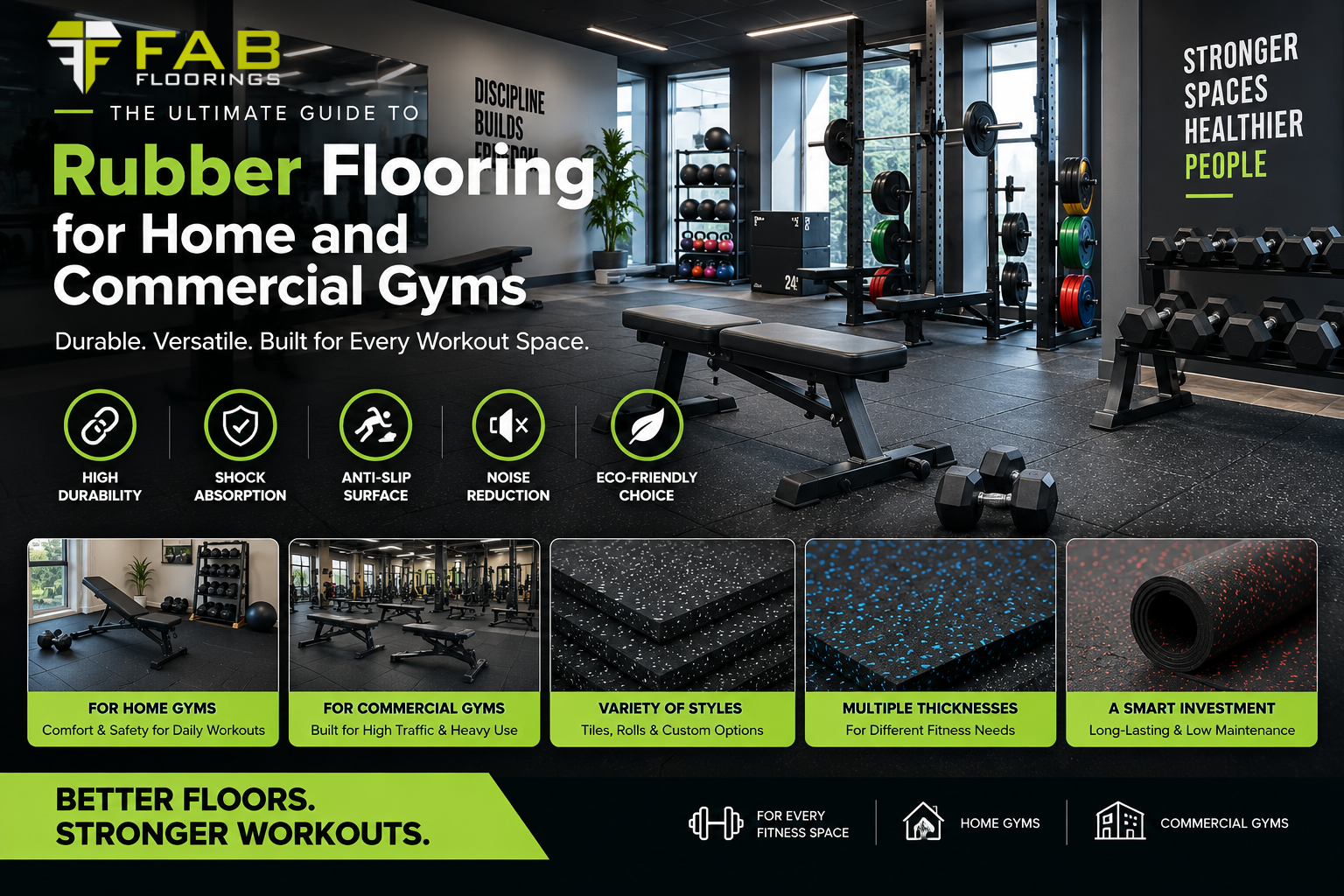
Choosing the right flooring is one of the most important decisions when designing a gym. Whether you are setting up a home workout room, a boutique fitness studio, or a large commercial gym, the floor needs to handle impact, heavy equipment, frequent movement, and daily foot traffic.
Rubber flooring is one of the most practical solutions for fitness environments because it combines durability, shock absorption, traction, noise control, and easy maintenance. It is available in several formats, including rubber tiles, interlocking tiles, rubber rolls, and heavy-duty mats, allowing you to choose a solution based on your workout area and equipment.
At Fab Floorings UAE, we provide rubber flooring solutions designed for different gym applications, from home fitness rooms to high-traffic commercial training facilities.
What Is Rubber Gym Flooring?
Rubber gym flooring is a resilient flooring system manufactured using natural or synthetic rubber, including recycled rubber materials. It is designed to withstand repeated impact and pressure while providing a stable and comfortable surface for exercise.
Rubber flooring is available in different thicknesses, textures, colours, and installation formats. This makes it suitable for everything from cardio and functional training areas to weightlifting zones and commercial fitness centres.
Popular options include:
- Rubber gym tiles
- Interlocking rubber tiles
- Rubber flooring rolls
- Heavy-duty rubber mats
- EPDM rubber flooring
- Laminated rubber tiles
Why Is Rubber Flooring Ideal for Gyms?
A gym floor has to deal with much more stress than a standard residential floor. Dumbbells can be dropped, equipment can remain in the same position for years, and hundreds of people may walk across the surface every day.
Rubber flooring provides several practical benefits.
1. Excellent Durability
Gym flooring needs to withstand constant use. High-density rubber flooring can handle heavy equipment, repetitive workouts, and regular foot traffic without wearing as quickly as many conventional flooring materials.
For commercial gyms, choosing the appropriate density and thickness is particularly important because the flooring may be exposed to continuous loads throughout the day.
2. Shock and Impact Absorption
Weightlifting and functional training create significant impact. Rubber flooring helps absorb and distribute some of this force instead of allowing it to transfer directly to the subfloor.
This makes rubber flooring particularly useful around:
- Free-weight areas
- Squat racks
- Deadlift zones
- Functional training areas
- CrossFit spaces
- Strength-training equipment
Thicker flooring can provide additional protection where heavy weights are regularly dropped.
3. Slip Resistance and Traction
A reliable gym floor should provide sufficient grip during movement. Rubber surfaces can provide traction for exercises such as lunges, squats, HIIT workouts, and functional training.
The right surface texture should be selected according to the type of exercise, footwear, cleaning requirements, and environment.
4. Noise and Vibration Reduction
Gym equipment and dropped weights can create considerable noise and vibration. Rubber flooring helps dampen these effects, making it particularly useful in apartment gyms, hotels, offices, residential spaces, and commercial fitness centres.
This can also help create a more comfortable workout environment when multiple activities are taking place simultaneously.
5. Easy Maintenance
Rubber gym flooring is relatively easy to maintain. Regular sweeping or vacuuming can remove loose dust and debris, while routine damp cleaning helps keep the surface hygienic.
Avoid aggressive cleaning chemicals unless they are specifically recommended for the flooring material. Following the manufacturer's maintenance instructions can help preserve the surface over time.
6. Long-Term Floor Protection
Heavy gym equipment can put considerable pressure on conventional flooring. Rubber flooring creates a protective layer between equipment and the structural floor.
It can help protect the subfloor from:
- Impact
- Scratches
- Dents
- Equipment movement
- Weight drops
- Repeated foot traffic
Types of Rubber Flooring for Home and Commercial Gyms
Different gym environments require different flooring formats. The most suitable option depends on the size of the area, workout type, equipment load, installation requirements, and maintenance expectations.
Rubber Flooring Rolls
Rubber rolls are suitable for covering larger gym areas with a consistent surface.
They are commonly used in:
- Commercial gyms
- Fitness clubs
- Sports academies
- Cardio areas
- Functional training spaces
- Large workout studios
One of their main advantages is the reduced number of joints compared with individual tiles. This can create a cleaner visual appearance across larger spaces.
Rubber Gym Tiles
Rubber tiles are a versatile choice for both home and commercial gyms. They can be installed across individual workout zones and are available in different thicknesses and designs.
Tiles are particularly useful when you want to replace a damaged section without removing the entire floor.
Interlocking Rubber Tiles
Interlocking tiles connect together without requiring the same installation approach as permanently bonded flooring systems.
They are useful for:
- Home gyms
- Garage gyms
- Functional training areas
- Personal training studios
- Temporary workout spaces
Their modular design can also make maintenance and replacement easier.
Heavy-Duty Rubber Mats
Heavy-duty mats are designed for areas where equipment and impact loads are particularly high.
They are commonly used beneath:
- Dumbbell racks
- Squat racks
- Weight benches
- Deadlift areas
- Strength equipment
- Heavy machines
Selecting the appropriate thickness and density is important for these applications.
EPDM Rubber Flooring
EPDM rubber flooring can provide a combination of performance and design flexibility. EPDM granules can be incorporated into flooring systems in different colour combinations, making them suitable for gyms where visual design and branding are important.
Rubber Flooring for Home Gyms
A home gym has different requirements from a large commercial facility. The flooring should protect the existing floor while providing enough comfort and stability for regular workouts.
For home gyms, consider:
- Available floor area
- Type of exercise
- Weight of equipment
- Noise levels
- Required thickness
- Ease of installation
- Cleaning requirements
Rubber tiles, interlocking tiles, and rubber mats can work well for smaller workout areas because they allow you to cover only the sections that require protection.
For example, a home gym with dumbbells and a weight bench may require more impact protection around the strength-training zone than around a stretching area.
Rubber Flooring for Commercial Gyms
Commercial gyms experience considerably higher foot traffic and equipment usage. Flooring must therefore be selected according to the intensity and frequency of use.
Commercial gym flooring may be required for:
- Fitness centres
- CrossFit facilities
- Boutique gyms
- Hotel gyms
- Sports academies
- Corporate fitness centres
- Personal training studios
- Martial arts facilities
For larger commercial areas, rubber rolls can provide broad continuous coverage, while thicker rubber tiles or heavy-duty mats can be used in high-impact zones.
How to Choose the Right Rubber Gym Flooring
Choosing gym flooring should not be based on appearance alone. Consider the following factors before making a decision.
1. Workout Type
Different workouts place different demands on the floor.
Cardio and general fitness: Consider durable rubber rolls or tiles.
Functional training: Interlocking tiles and resilient rubber surfaces can provide a practical solution.
Weightlifting: Choose thicker, high-density rubber designed to handle impact.
CrossFit and high-impact training: Heavy-duty rubber flooring can provide additional protection.
2. Flooring Thickness
Thickness is an important consideration because heavier equipment and high-impact activities generally require greater protection.
As a general starting point:
| Gym Area | Typical Consideration |
|---|---|
| Yoga & stretching | 6–8 mm |
| Cardio areas | 8–10 mm |
| Home gym | 10–12 mm |
| Commercial gym | 12–15 mm |
| Heavy weightlifting | 15–25 mm |
| High-impact training | 20 mm+ |
These ranges are indicative rather than universal. The correct specification depends on equipment weight, impact level, subfloor construction, and the flooring product selected.
3. Surface Texture
The surface should provide an appropriate level of traction without making cleaning unnecessarily difficult.
Smooth, textured, and studded rubber surfaces are available for different applications.
4. Installation Method
Consider whether the flooring will be permanently installed or whether you need a modular solution.
- Tiles: Easier to replace individually.
- Interlocking tiles: Convenient for modular installations.
- Rolls: Suitable for larger areas and continuous coverage.
- Mats: Useful for targeted equipment protection.
5. Gym Design
Rubber flooring is available in different colours and patterns. EPDM surfaces can provide additional design possibilities for premium gyms, branded workout zones, and modern fitness studios.
You can use different colours to visually separate:
- Cardio zones
- Weightlifting areas
- Functional training spaces
- Reception areas
- Walking paths
Rubber Flooring vs Conventional Gym Flooring
Rubber flooring is specifically designed to deal with impact, equipment loads, and demanding workout conditions.
Compared with conventional hard flooring, rubber provides greater resilience and cushioning. It can also help reduce noise and vibration from exercise equipment and dropped weights.
However, the best flooring system depends on the application. Areas such as reception spaces, changing rooms, offices, and specialised sports zones may require different flooring materials.
How to Maintain Rubber Gym Flooring
Proper maintenance helps preserve the appearance and performance of rubber flooring.
Recommended routine:
- Remove dust and debris regularly.
- Sweep or vacuum the surface.
- Damp mop using a suitable mild cleaning solution.
- Clean spills promptly.
- Avoid harsh chemicals unless approved by the manufacturer.
- Keep heavy equipment properly positioned.
- Inspect seams and damaged areas periodically.
For commercial gyms, establish a regular cleaning schedule because sweat, dust, rubber particles, and high foot traffic can quickly build up on frequently used surfaces.
Why Choose Fab Floorings for Rubber Gym Flooring?
Fab Floorings UAE provides rubber flooring solutions for both home and commercial fitness environments. Our range includes rubber tiles, interlocking tiles, rubber rolls, EPDM flooring, and heavy-duty gym mats.
The right flooring can be selected according to the workout environment, equipment load, traffic level, design requirements, and installation needs.
Whether you are creating a compact home gym or developing a large commercial fitness facility, professional guidance can help you select a flooring system that balances durability, safety, appearance, and maintenance.
Create a Safer, More Durable Gym Floor
Rubber flooring is a practical solution for modern fitness environments because it combines impact resistance, traction, noise reduction, durability, and easy maintenance.
The key is choosing the right rubber gym flooring for your specific application. Home gyms may benefit from modular tiles or mats, while large commercial facilities may require rubber rolls and dedicated heavy-duty flooring in weightlifting zones.
Explore the rubber flooring options from Fab Floorings UAE and choose a solution designed around your gym's space, equipment, and workout requirements.