Top 10 Reasons to Choose Durable Gym Floorings for Your Studio
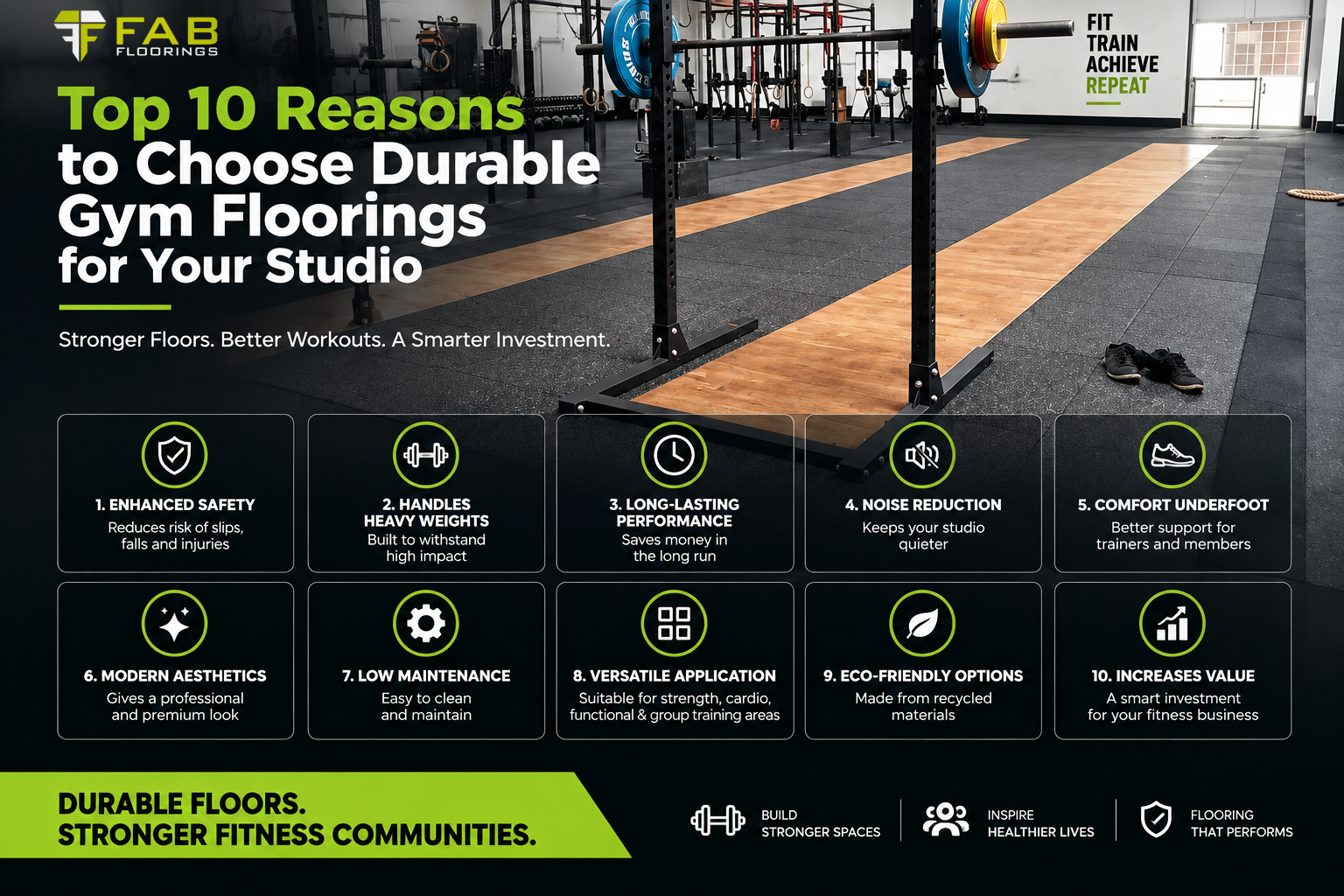
Choosing the right flooring is one of the most important decisions when designing a fitness studio. From weight training and HIIT workouts to yoga, functional training, and group classes, the floor needs to handle constant movement, heavy equipment, and regular foot traffic.
Durable gym flooring provides the strength, cushioning, traction, and long-term performance required in demanding workout environments. High-quality rubber flooring, gym mats, and other resilient flooring solutions can also help protect the subfloor while creating a safer and more comfortable workout space.
Here are the top 10 reasons to choose durable gym flooring for your studio.
1. Built to Handle Heavy Gym Use
Fitness studios experience continuous foot traffic and repeated impact from equipment and workouts. Durable gym flooring is designed to withstand demanding use without quickly becoming damaged or worn.
High-density rubber flooring, for example, can handle weights, strength-training equipment, cardio machines, and frequent movement. This makes it a practical choice for both commercial gyms and boutique fitness studios.
2. Provides Better Protection for the Subfloor
Dropped dumbbells, kettlebells, weight plates, and heavy machines can place significant stress on the underlying floor.
A durable gym floor creates a protective layer between the workout equipment and the subfloor. Rubber tiles and rolls can help absorb impact and reduce the risk of dents, scratches, and surface damage.
This can also help reduce future repair and maintenance requirements.
3. Improves Workout Safety
Safety should be a key consideration when selecting flooring for any fitness facility.
Quality gym flooring can provide better traction and a stable surface for different types of workouts. Slip-resistant rubber flooring is particularly useful in areas where users perform dynamic movements, strength exercises, or high-intensity training.
A stable surface can help create a more controlled workout environment for members and trainers.
4. Helps Absorb Impact and Reduce Stress
High-impact exercises can place repeated stress on the floor as well as on the user's joints.
Rubber gym flooring offers impact-absorbing properties that make workout areas more comfortable during activities such as jumping, running, functional training, and weightlifting.
The appropriate flooring thickness and construction can provide additional cushioning where higher impact levels are expected.
5. Reduces Noise and Vibrations
Noise from dropped weights, moving equipment, jumping, and heavy foot traffic can affect the atmosphere of a fitness studio.
Rubber flooring helps absorb vibrations and can reduce the transmission of impact noise compared with harder bare-floor surfaces. This makes it particularly useful for gyms located in commercial buildings, residential complexes, offices, or multi-purpose facilities.
A quieter workout environment can also improve the overall experience for gym users and nearby occupants.
6. Easy to Clean and Maintain
Gym floors are exposed to sweat, dust, dirt, and frequent foot traffic, so easy maintenance is essential.
Durable rubber flooring is relatively simple to clean and maintain when the manufacturer's recommended cleaning procedures are followed. Regular cleaning helps maintain the floor's appearance while supporting a more hygienic workout environment.
Low-maintenance flooring can also save gym operators time and reduce ongoing upkeep requirements.
7. Long-Term Value for Your Studio
The cheapest flooring option is not always the most economical choice over the life of a gym.
Durable flooring is designed to withstand repeated use for longer periods, which can reduce the frequency of replacement and repairs. Although high-quality flooring may require a greater initial investment, its durability can provide better long-term value.
For busy commercial studios, this is especially important because replacing damaged flooring can also interrupt normal operations.
8. Available in Different Designs and Finishes
Gym flooring does not have to look purely functional. Modern rubber flooring is available in different colours, patterns, textures, tile formats, and roll options.
Studios can select flooring that complements their interior design, equipment, branding, and workout zones.
For example, different colours can be used to visually separate strength-training areas, functional training zones, cardio spaces, and group workout sections.
9. Suitable for Different Workout Areas
One of the major advantages of durable gym flooring is its versatility.
Different flooring formats can be selected according to the requirements of each area:
- Rubber tiles for weight training and strength zones
- Rubber rolls for large open workout spaces
- EPDM flooring where enhanced colour and design options are required
- Gym mats for equipment and specific training stations
- Cushioned flooring for activities requiring additional comfort
Selecting the appropriate flooring according to the activity can help improve both functionality and user experience.
10. Can Support a Professional Gym Environment
Flooring contributes to more than just protection and performance. It also affects how a fitness studio looks and feels.
A clean, well-installed, durable floor can give the facility a professional appearance while supporting the demands of everyday training. Combined with suitable gym equipment, lighting, ventilation, and layout, quality flooring can help create a more functional workout environment.
For studios in the UAE, selecting flooring that is appropriate for the intended indoor or semi-open application is also important. Product specifications, installation conditions, temperature exposure, and maintenance requirements should be considered before choosing a flooring system.
Choose the Right Gym Flooring for Your Studio
Durable gym flooring is an important part of creating a safe, functional, and long-lasting fitness facility. From impact absorption and subfloor protection to noise reduction, easy maintenance, and design flexibility, the right flooring can support both everyday workouts and long-term studio operations.
At Fab Floorings, we provide a range of rubber flooring solutions designed for gyms, fitness studios, training areas, and other demanding spaces. Explore our gym flooring options to find a solution suited to your studio's workout activities, traffic levels, and design requirements.