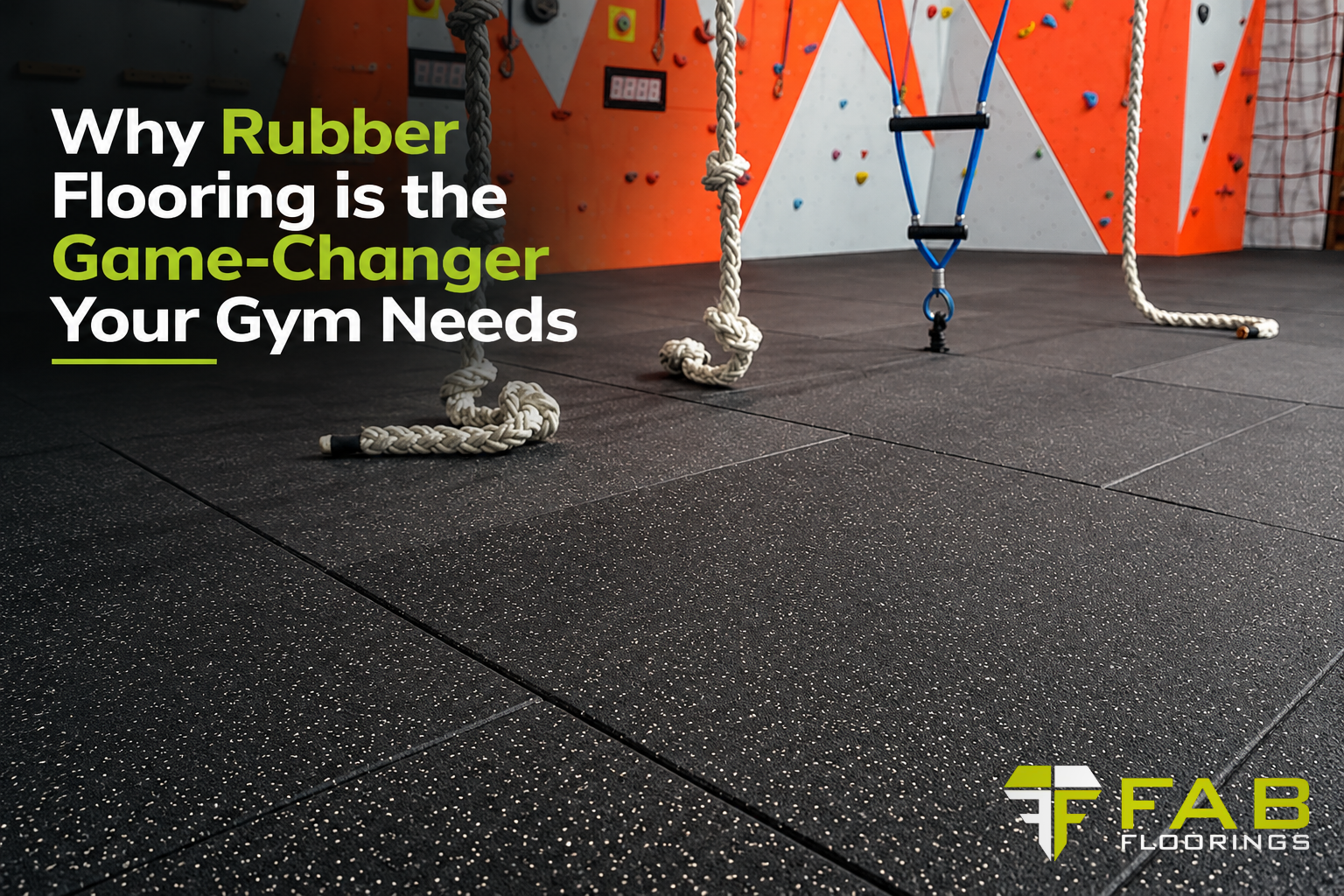
A gym is more than a collection of machines and workout equipment. The flooring underneath every treadmill, squat rack, dumbbell area, and functional training zone plays an important role in the overall training environment.
The right rubber gym flooring can help protect the subfloor, manage impact, improve traction, reduce noise and provide a durable surface for everyday workouts. This makes rubber flooring a practical option for commercial gyms, fitness studios, CrossFit facilities, hotel gyms, home gyms and strength-training spaces.
But choosing gym flooring should not be based on appearance alone. Different workout areas have different requirements, and the right flooring system depends on factors such as impact level, equipment weight, traffic, thickness, density and installation conditions.
What Makes Rubber Flooring Different?
Rubber flooring is a resilient flooring solution designed to handle demanding environments. Unlike conventional hard flooring, rubber can provide cushioning and impact management while creating a stable surface for exercise.
It is available in several formats, including:
- Rubber tiles
- Interlocking rubber tiles
- Rubber rolls
- Heavy-duty rubber mats
- EPDM rubber flooring
- Specialised weightlifting flooring
The best format depends on the layout and intended use of the gym.
1. Protects Your Gym Floor
Heavy weights and gym equipment can put considerable stress on concrete and other underlying surfaces.
Repeated movement, equipment vibration and accidental weight drops can eventually contribute to surface damage.
Rubber flooring creates a protective layer between the workout equipment and the subfloor. This can be particularly useful in:
- Free-weight areas
- Weight rooms
- Functional training zones
- Strength-training areas
- CrossFit facilities
For areas involving heavy weight drops, thicker and more impact-resistant flooring may be more appropriate.
2. Helps Absorb Workout Impact
Impact management is one of the biggest reasons gyms choose rubber flooring.
Exercises such as jumping, kettlebell training, functional workouts and weightlifting can generate significant impact.
A suitable rubber flooring system can help absorb and distribute some of this impact, creating a more comfortable training surface.
The required thickness and density should be selected according to the actual activity rather than assuming that the thickest flooring is always the best choice.
3. Provides Traction and Stability
A stable training surface is important when performing exercises involving movement, lifting or rapid changes in direction.
Rubber flooring can provide useful traction for activities such as:
- Strength training
- HIIT
- Functional training
- CrossFit
- Cardio workouts
- Free-weight exercises
The actual grip performance depends on the product's surface texture and specification.
4. Helps Control Noise and Vibration
Gym workouts can generate considerable noise.
Weights being placed on the floor, equipment vibration, jumping exercises and heavy machines can all contribute to sound transmission.
Rubber flooring can help absorb some impact and vibration, which can be particularly useful in:
- Apartment gyms
- Hotel fitness centres
- Basement gyms
- Commercial fitness centres
- Multi-level buildings
- Residential gyms
For projects where acoustic performance is especially important, flooring should be selected as part of a broader noise-control strategy.
5. Built for Heavy Daily Traffic
A commercial gym may have users throughout the day, with continuous movement across the floor.
Rubber flooring is widely used in demanding fitness environments because it can handle regular foot traffic and contact with gym equipment when the appropriate product is selected.
This makes it suitable for spaces such as:
- Commercial gyms
- Personal training studios
- Fitness clubs
- Hotel gyms
- Sports facilities
- Home gyms
Rubber Flooring for Different Gym Zones
One of the smartest approaches to gym flooring is to divide the facility into functional zones.
Cardio Area
Treadmills, bikes, rowing machines and cross trainers generally create repetitive traffic rather than extreme weight impact.
A suitable rubber roll or tile system can provide a durable and easy-to-maintain surface.
Strength Training Area
Strength areas contain machines, benches, dumbbells and barbells.
Here, durability, stability and impact management become more important.
Heavy Weightlifting Area
Heavy lifting areas may require thicker and more impact-resistant rubber flooring or dedicated heavy-duty mats.
The flooring should be selected based on the type of weights, equipment and training performed.
Functional Training Area
Functional training may involve:
- Kettlebells
- Sleds
- Battle ropes
- Jumping exercises
- Agility drills
- Bodyweight training
A durable rubber surface with suitable traction can work well for these applications.
Rubber Tiles vs Rubber Rolls
Both rubber tiles and rubber rolls can be effective gym flooring options, but they have different practical characteristics.
| Feature |
Rubber Tiles |
Rubber Rolls |
| Format |
Individual sections |
Continuous rolls |
| Installation |
Flexible/modular |
Suitable for larger areas |
| Replacement |
Individual sections can be replaced |
More continuous surface |
| Design |
Multiple layout options |
Consistent appearance |
| Suitable for |
Defined gym zones |
Larger workout areas |
| Heavy-use applications |
Suitable with correct specification |
Suitable with correct specification |
The right choice depends on the size of the gym, layout, equipment and maintenance requirements.
What Thickness Should You Choose?
There is no universal thickness for every gym.
A suitable thickness depends on:
- Type of workout
- Equipment weight
- Impact level
- Foot traffic
- Subfloor
- Required cushioning
- Installation method
For example, general cardio areas may have different requirements from heavy weightlifting zones.
Instead of selecting one thickness for the entire facility, consider the requirements of each training zone.
Density Matters Too
Thickness is only one part of rubber flooring performance.
Density can also influence how the flooring behaves under load and impact.
Two products with the same thickness can perform differently depending on their composition and density.
When comparing flooring products, ask about both thickness and density, particularly for areas with heavy equipment or high-impact training.
Is Rubber Flooring Suitable for Dubai Gyms?
Dubai gyms can experience heavy daily usage, frequent cleaning, dust, sand brought in from outside, and high indoor cooling requirements.
Although most gyms are climate-controlled, the flooring should still be selected according to:
- Indoor environment
- Traffic level
- Cleaning frequency
- Moisture exposure
- Equipment load
- Installation conditions
For semi-outdoor or less-controlled spaces, environmental suitability should be discussed with the flooring supplier before selecting the product.
Rubber Flooring Is More Than Just a Protective Layer
A good gym floor contributes to the overall training environment.
It can help create a surface that is:
Durable – designed for regular gym use.
Impact-conscious – helps manage the effects of workouts and equipment.
Stable – provides a consistent surface for training.
Practical – available in different formats for different gym zones.
Maintainable – can be cleaned using suitable routine methods.
Professional-looking – different colours and formats can complement modern gym interiors.
This combination is one reason rubber flooring continues to be widely used in fitness facilities.
How to Maintain Rubber Gym Flooring
Even durable flooring needs regular care.
Remove Dust and Dirt
Sweep or vacuum regularly to prevent loose dirt and debris from accumulating.
Clean Spills Quickly
Sweat, water and other liquids should be cleaned promptly.
Use Suitable Cleaning Products
Follow the manufacturer's recommendations and avoid unsuitable harsh chemicals.
Pay Attention to High-Traffic Zones
Entrances, free-weight areas and equipment zones should be inspected regularly.
Check Edges and Joints
For tile or interlocking systems, periodically inspect joints and edges for movement or damage.
Proper maintenance can help keep the gym floor hygienic and presentable.
Common Mistakes When Choosing Gym Flooring
Choosing Only by Price
A low purchase price does not necessarily mean better long-term value.
Consider thickness, density, durability, installation and maintenance requirements together.
Using One Flooring Specification Everywhere
Different gym zones experience different levels of impact and traffic.
A cardio area does not necessarily need the same flooring specification as a heavy lifting area.
Ignoring the Subfloor
The existing concrete or subfloor should be assessed before installation.
Uneven, damaged or unsuitable surfaces can affect the finished flooring.
Forgetting Installation
The installation method can influence the performance and appearance of the flooring.
Always confirm whether the flooring is intended to be loose-laid, interlocking, bonded or installed using another method.
Not Planning for Maintenance
Ask about cleaning requirements before purchasing the flooring system.
How to Choose the Right Rubber Flooring for Your Gym
Before selecting a product, answer these questions:
1. What type of gym is it?
Home gym, commercial gym, CrossFit facility, hotel gym or specialised training centre?
2. What workouts will take place?
Cardio, strength training, HIIT, functional training or heavy lifting?
3. What equipment will be installed?
Treadmills and machines have different flooring requirements from squat racks and free weights.
4. How much traffic is expected?
A high-traffic commercial gym may require a more robust flooring specification.
5. What is the existing subfloor?
Concrete condition, level, moisture and cleanliness should be assessed.
6. Which format is appropriate?
Tiles, interlocking tiles, rolls or heavy-duty mats?
7. What thickness and density are required?
These should match the expected impact and equipment load.
8. How will the floor be maintained?
Make sure the cleaning requirements are practical for your facility.
Why Choose Fab Floorings for Rubber Gym Flooring?
Fab Floorings provides rubber flooring solutions for fitness and commercial applications in Dubai and across the UAE.
The flooring can be considered for different areas, including:
- Commercial gyms
- Home gyms
- Weight rooms
- CrossFit facilities
- Functional training areas
- Fitness studios
- Hotel gyms
The right solution can be selected according to the gym's layout, workout type, equipment, impact level and overall project requirements.
Rather than selecting the thickest or most expensive option automatically, the goal should be to create a flooring system that matches the way the facility will actually be used.
Final Thoughts
Rubber flooring can be a game-changer for a gym because it combines durability, impact management, traction, subfloor protection and practical maintenance in one flooring solution.
However, choosing the right rubber flooring is just as important as choosing rubber flooring itself.
Consider the gym zone, workout intensity, equipment, thickness, density, flooring format, subfloor and installation requirements before making your selection.
For a professional gym in Dubai or anywhere in the UAE, a properly planned rubber flooring system can help create a safer, more comfortable and more durable training environment for everyday users.
Fab Floorings offers rubber gym flooring solutions for different fitness applications, helping gym owners and facility managers select flooring according to their specific project requirements.